

-
 Welded Wire Mesh vs Chain Link vs Fibrecrete for Surface Support
- 12th octubre 2026
Welded Wire Mesh vs Chain Link vs Fibrecrete for Surface Support
1. What Is Surface Support in Underground Mining?
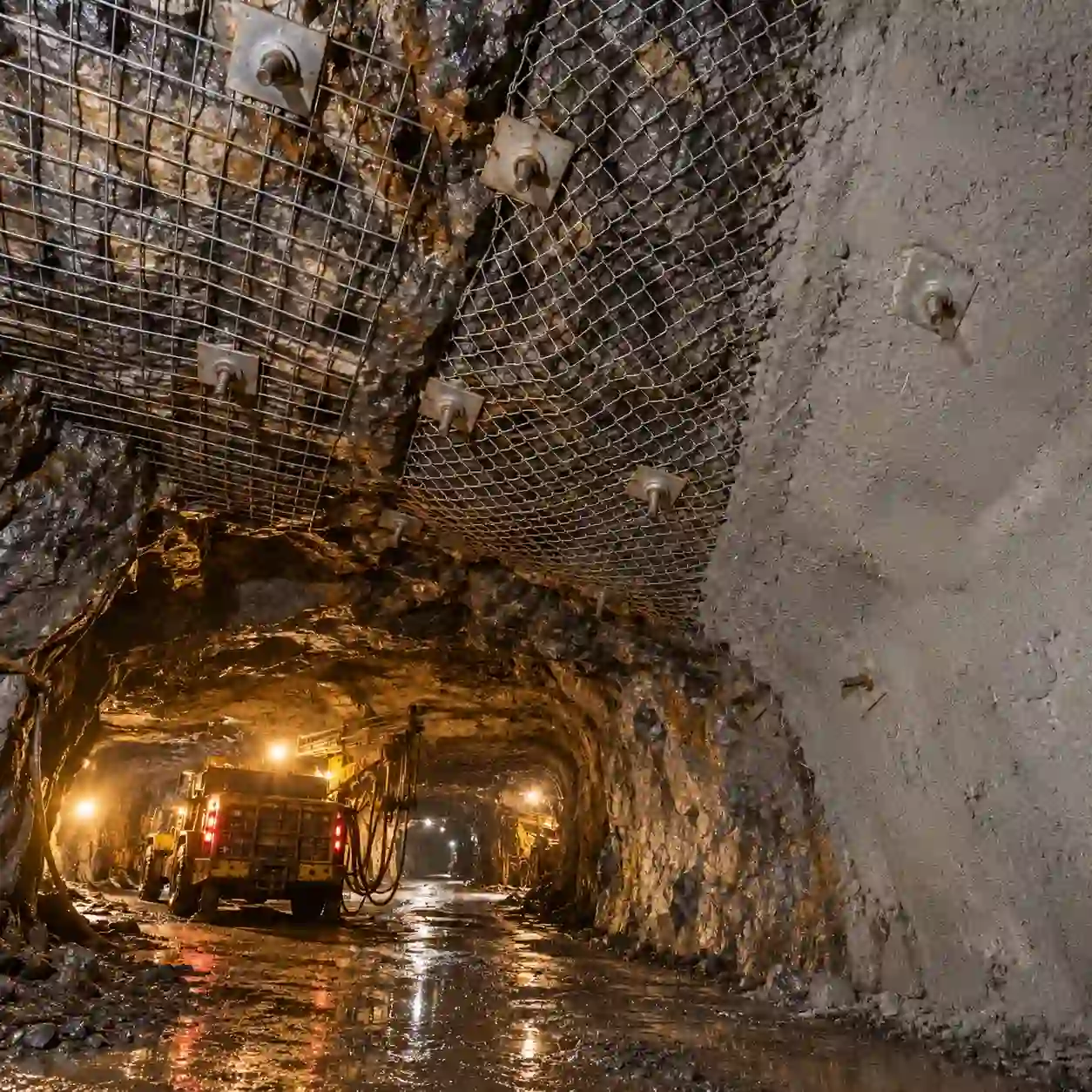
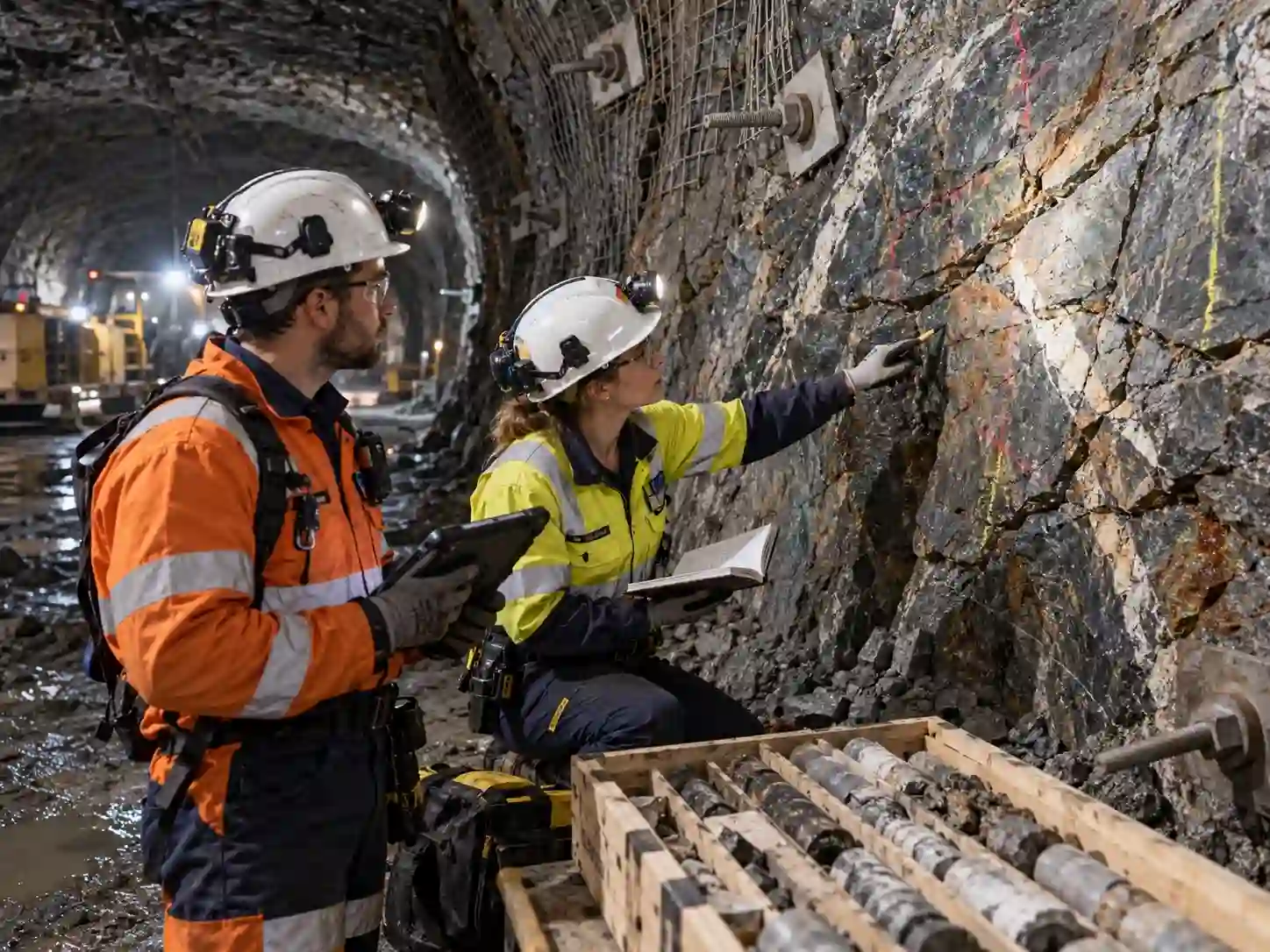
Surface support is applied to the surface of the excavation to help hold back or contain loose rock that may fall.
Most ground support systems will use rock bolts or cable bolts to help strengthen the surrounding rock. The surface support will aid in containing small pieces of broken rock or debris between the bolts.
Some underground mining support systems may consist of:
- Rock bolts/cable bolts
- Welded wire mesh/chain link mesh
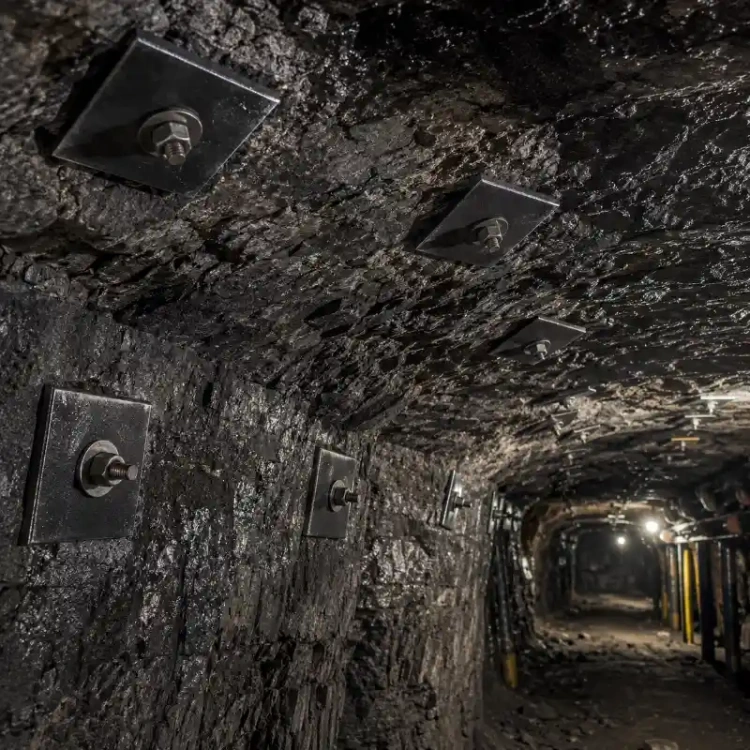
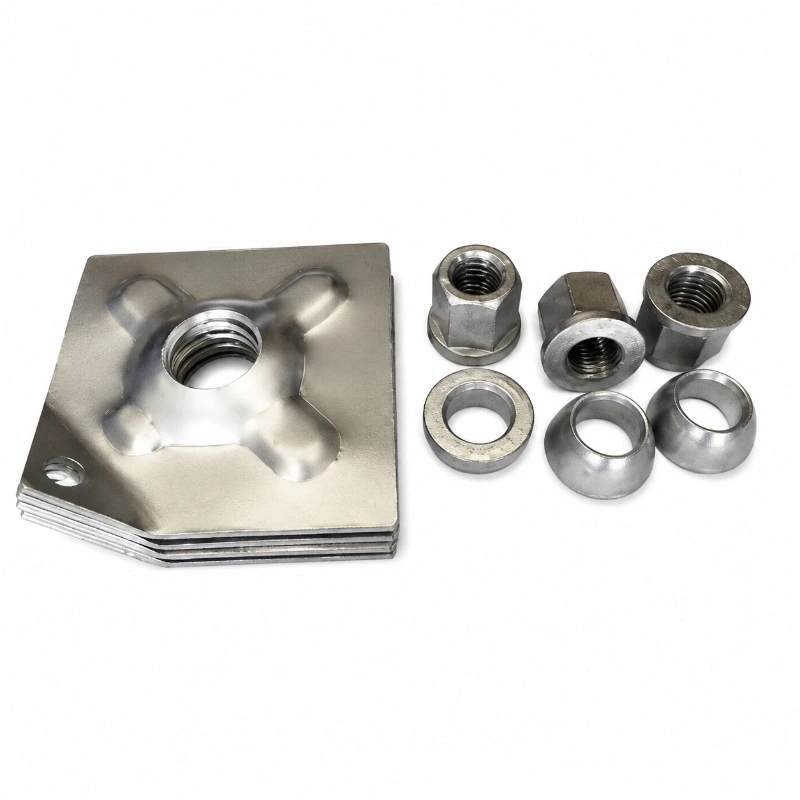
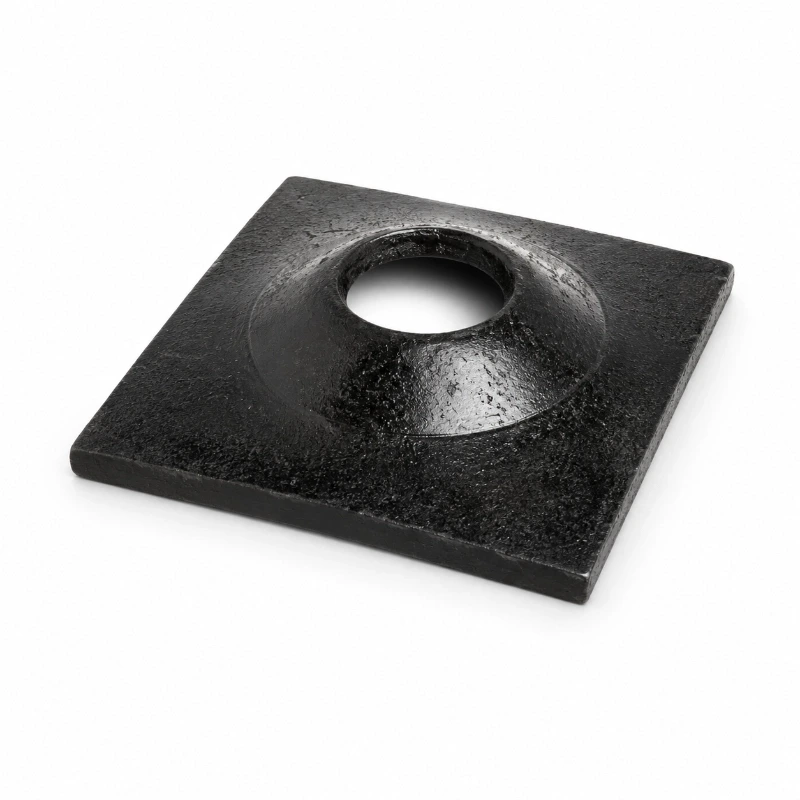
- Steel straps and bearing plates
- Shotcrete/fibre shotcrete
- Other yielding support if required.
All of these products play a role in a support system.
Bolts will give you reinforcement and support. Mesh or shotcrete will help contain the broken rock. Bearing plates and straps allow you to connect all of the support system together.
So when thinking about surface support you should always look at what other support you have in place. Not only think about one product by itself.
To learn more about ground support systems used in underground mining click here Mining Ground Support Systems Explained: Bolts, Cables, Mesh and Straps.
2. What Is Welded Wire Mesh for Mining?
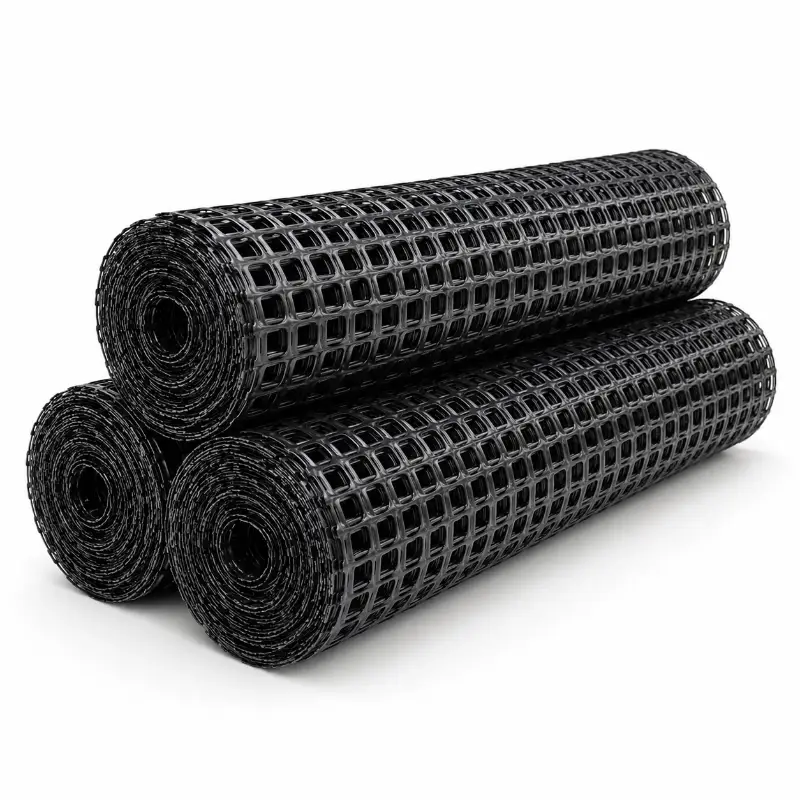
Welded wire mesh is made up of steel wires that are placed together in a pattern and welded at each crossing.
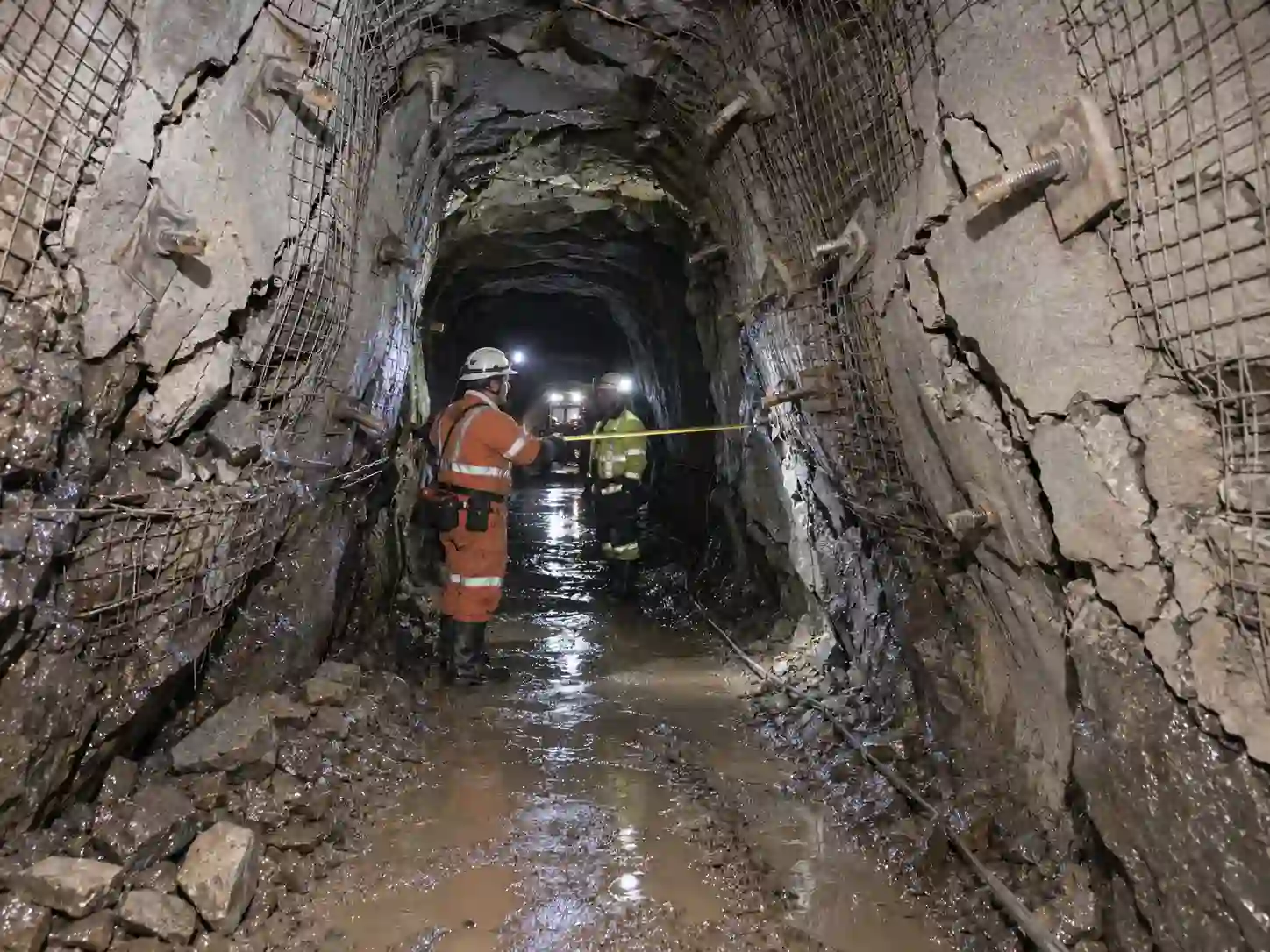
When using welded mesh in an underground mining environment they can be placed on top of your roof and/or wall to help contain any loose rock between your rock bolts.
Advantages
Size and Shape of Panel
You can order welded mesh in various sizes and shapes. With wire diameter and opening sizes available to suit your application.
Fácil instalación
Mesh can be installed quickly using appropriate bearing plates and bolts to attach it to the rock.
Helps keep debris off of workers
Mesh when designed correctly can help stop loose rock from falling onto personnel working underground.
Can be used with other support products
Mesh can be used in combination with resin rock bolts, friction rock bolts, bearing plates and steel straps. This will depend on what support system is designed for.
Disadvantages
Wire mesh can become deformed or break if put under too much load.
There is many factors that can affect how much load a mesh can take before failing. Wire type and size, welding pattern and points, size of mesh, loading and attachments to other support products.
Standard welded wire mesh should not be thought of as a yielding product or one that can absorb large amounts of energy.
Applications
- Road ways in underground mines
- Roof and walls in tunnels
- Intersections in mines
- Anywhere you want to help retain loose rock
- As standard ground support if you have mesh that meets these specifications.
Wanfeng has a range of mining mesh available to fit your needs. Our Soluciones para el refuerzo de galerías mineras will have various panel sizes, wire diameters and mesh openings.
3. What Is Chain Link Mesh for Mine Surface Support?
Chain link mesh is made up of wires woven together to form a flexible mesh pattern with diamond shaped apertures.
Generally there will not be a weld connecting each wire to the next.
As such this will effect how the mesh behaves under displacement and can transfer load through the mesh.
But chain link mesh is not comparable to high tensile mesh used in mining.
They will differ greatly in many aspects. From the type of steel used to how the mesh is connected and supported.
Main Benefits
Able to deform
Mesh can allow for deformation by the mesh distorting and allowing the wire to move.
Distribute load
Mesh can allow for localised loads to be transferred through the mesh to other areas of support.
Conforms to rock face
Can be used over uneven rock faces but anchoring points and installation still plays a key role.
Dynamic use
There are chain link mesh’s that have been manufactured and tested for high deformation applications.
Limitations
Do not assume that because mesh can deform it can withstand impacts or absorb energy.
- Type of steel
- Thickness of wire
- Size of mesh
- Detalle del borde
- Bolting and plate details
- Tightness when installed
- Configuration
It should also be noted that chain link mesh should not be used as a dynamic system. Unless tested to these standards.
Aplicaciones comunes
- Deforming rock underground
- Irregular faces
- Support to be used where you need a flexible surface.
- Certain areas of high stress in mines.
- That can be designed to take high displacements.
Various research has been conducted into different types of surface support for use in mines. These can show the difference in deformation and energy absorbed. But should not be assumed that all chain link and welded mesh’s act in these ways.
For more information refer to A Review of Investigations on Ground Support Requirements in Coal Burst-Prone Mines.
4. What Is Fibrecrete in Underground Mining?
Shotcrete that contains fibres is also known as Fibrecrete.
This is sprayed concrete that contains an amount of reinforcing fibre.
These fibres can be made of steel or synthetic material.
The use of fibres will create a fairly continuous lining on the rock surface.
Advantages
Continuous surface coverage
As spray concrete can cover most rock surface profiles. It can also cover surface voids and leave a more continuous lining.
Surface confinement
Properly design shotcrete can help restrain fractured rock around the opening.
Post-cracking performance
The use of fibre can increase residual strength and toughness properties of hardened shotcrete.
Integration with rock reinforcement
Fibrecrete can be used alongside bolts and other ground support elements.
Disadvantages
Many things need to be considered when using fibrecrete not just how much fibre you put in your shotcrete.
- Mix design of shotcrete.
- Type and amount of fibre.
- Thickness of shotcrete placed.
- Strength at early ages and at maturity.
- Toughness and residual strength of shotcrete.
- Adhesion to rock surface.
- Rock surface preparation.
- Curing.
- Quality of shotcrete spraying.
- Amount of deformation required.
Fibre shotcrete will fail if too much ground movement occurs.
Should not be viewed as a more ductile material then mesh if installed correctly.
See NIOSH publication on Shotcrete Design and Installation Compliance Testing: Early Strength, Load Capacity, Toughness, Adhesion Strength and Applied Quality.
5. Welded Wire Mesh vs Chain Link vs Fibrecrete: Key Differences
| Comparación | Welded Wire Mesh | Chain Link Mesh | Fibrecrete |
| Basic structure | Welded steel wire grid | Interwoven steel wire mesh | Fibre-reinforced sprayed concrete |
| Función principal | Loose rock retention | Flexible surface retention | Continuous surface retention and confinement |
| Flexibility | Depends on grid, wire and weld properties | Often greater geometric flexibility | Depends on cracking, fibre reinforcement and lining properties |
| Large deformation | Configuration dependent | Can be suitable with engineered systems | Requires verified post-cracking performance |
| Dynamic performance | Must be tested | Must be tested | Must be tested |
| Surface coverage | Open mesh | Open mesh | Continuous lining |
| Equipo | Mesh handling and fixing equipment | Mesh handling and fixing equipment | Spraying and concrete-handling equipment |
| Installation quality | Overlap, connections and panel condition | Tension, edge details and connections | Thickness, application quality and curing |
| Procurement specification | Wire, aperture, welds, panel, coating | Wire, geometry, strength, edges, test data | Mix, fibres, thickness, strength, toughness |
| Typical role | General rock retention | Flexible retention | Surface lining and confinement |
It’s a qualitative comparison.
Will need to be determined by product information, lab test results or calculated or proven on other projects.
6. Which Surface Support Performs Better Under Rock Deformation?
An underground excavation could encounter various types of ground response from loosening to deformation, squeezing and dynamic loads.
All these could have an effect on how a surface support material performs.
Relatively Stable Rock with Fractures
Welded wire mesh could be adequate if you require surface support to hold back pieces of rock between rock bolt spacing.
Ground with Significant Expected Displacement
If you know you’re going to experience deformation you may want to consider using a flexible mesh.
Chain link mesh could be used if it meets the requirements of your support system.
Ground Requiring Continuous Surface Confinement
Fibrecrete could be beneficial if you want surface support in contact with all aspects of the rock profile and require shotcrete as part of your support system.
Dynamic or Rockburst-Prone Conditions
There are many considerations when selecting a surface support system that may be subjected to dynamic loads.
The system needs to be able to withstand the loading and deformations that may occur.
You shouldn’t choose one material over another based on it being a rock burst mesh or just being flexible and strong or fibre reinforced.
More research can be found here about mesh, fibrecrete and a combination of both.
Quasi-Static and Mechanical Shock Testing of Reinforced Shotcrete Surface Support
7. Can Welded Mesh or Chain Link Mesh Be Combined with Fibrecrete?
Sí.
Surface support doesn’t have to be one or the other.
Pernos de roca con malla de alambre soldada
Could be used as a reinforcement and to hold the surface. Depending on mesh and connection details.
Rock bolts with fibrecrete
Reinforcing the rock mass and providing a surface lining of shotcrete.
Rock bolts with mesh and shotcrete
Can be used together if the mesh and shotcrete are designed to work together.
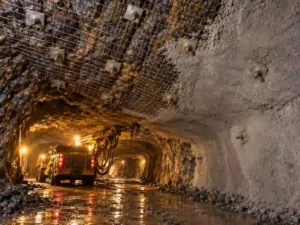
Yielding rock bolts with flexible mesh.
This could be considered if large deformation or dynamic loads are expected.
Again this would depend on what your support system is trying to achieve and can be backed up with evidence.
Just because you can combine products it doesn’t mean it will always be a benefit to your support system.
For a wider selection of compatible components, explore Wanfeng’s Surface Support and Reinforcement Materials.
8. Installation Considerations: Mesh vs Fibrecrete
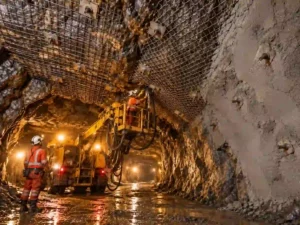
You need to consider what will be involved when installing.
Welded Mesh Installation
- Considerations may include;
- Transporting of mesh panels
- Equipment used to install mesh
- Overlap of mesh panels
- Where anchors will be placed
- Plates that can be used
- Ability to get mesh onto rock surface
- Size of wire and welds required
Chain Link Mesh Installation
- Some considerations to be aware of are;
- Transporting mesh rolls/panels
- How to close off ends
- Tension required during installation
- Overlap/joining of mesh
- What plates/connectors can be used
- Keeping wire/coating protected
Fibrecrete Installation
- Things that you need to consider when using fibrecrete are;
- Preparing rock face
- Equipment to spray material
- Transporting of material
- Adequate ventilation/dust control
- Controlling rebound
- Thickness of application
- Strength at early age
- Quality Control testing
The quality of the product that you spray will also play a factor in how your product performs.
Not having the right thickness or not adhering to the rock face etc can all have an effect on your lining.
Applied quality of the shotcrete will also have an effect on its performance.
It can be under applied, have insufficient bond to the surrounding rock or may not be cured correctly all of which will effect the lining.
9. Cost Comparison: Which Surface Support Is More Economical?
You can’t say for sure which surface support will be cheaper.
Material price is only one aspect.
Cost should be taken into account.
| Cost Component | Mesh Systems | Fibrecrete |
| Material | Mesh panels or rolls, accessories | Concrete, fibres, admixtures |
| Transport | Packaging, handling, site delivery | Material delivery and handling |
| Equipo | Handling and fixing equipment | Spraying, pumping, mixing equipment |
| Labor | Positioning, fixing, joining | Surface preparation and spraying |
| Installation productivity | Panel size and installation sequence | Application rate and required thickness |
| Quality control | Wire, mesh and connection inspection | Thickness, strength, toughness and bond testing |
| Maintenance | Damage, corrosion and replacement | Cracking, debonding and repairs |
Another way to look at it is as follows;
Materials + Transport + Plant + Labour + Quality Assurance + Maintenance & Repairs.
If working underground additional delays to the mining cycle can affect the installed price.
It may work out cheaper to purchase a cheaper product that has a slower install rate or is not suitable for the application or requires regular repair.
So only viable options need to be compared.
10. How to Specify Mining Surface Support Materials for Procurement
Specifications will need to be written in sufficient detail to enable an overseas manufacturer to meet your specification.
Welded Wire Mesh
- Diámetro del alambre
- Grado de acero
- Properties of wire
- Tamaño de apertura
- Width and Length of panel
- Welding specifications
- End wire details
- Revestimiento
- Overlap on installation
- Testing criteria
- Embalaje
Chain Link Mesh
- Diámetro del alambre
- Tensile strength of wire
- Aperture and shape
- Width of mesh and roll length
- Ends of mesh
- Connections and overlaps
- Revestimiento
- Load deflection criteria
- Dynamic testing if applicable
Fibrecrete
- Concrete mix design
- Fibres used and concentration
- Min thickness
- Green Strength
- Design strength
- Residual strength/toughness
- Energy absorption if required
- Bond criteria
- QA Procedures
- Test Criteria
Check out our range of Wanfeng mining mesh and associated products here.
11. Common Mistakes in Surface Support Selection
Mistake 1: Selecting Mesh Based On Wire Size
The wire size will not tell you what the full installed system is capable of.
The steel itself, shape, welds and how its connected and loaded also come into play.
Mistake 2: Chain Link Is Not Always High-Tensile
Just because something is chain link doesn’t mean it’s high-tensile chain link mesh.
There are many products available on the market that may not meet these requirements.
Mistake 3: Fibrecrete Will Allow Me To Skip Bolting
Shotcrete alone will not allow you to omit bolting into the rock mass.
It’s all about your ground support system and what its trying to achieve.
Mistake 4: Dont Forget Your Connections
Mesh will not achieve its desired performance if the connecting plates, bolts/straps or edges are not suitable.
Mistake 5: Use Strength As A Benchmark For Performance
Just because your material has a high strength value does not mean it will deform or withstand impacts.
You need to have evidence of your products ability when used under dynamic situations.
12. Frequently Asked Questions
Q1: Is welded mesh better than chain link?
No there isn’t one product that will out perform another. Typically you would see welded mesh used for standard surface support applications. If your application requires higher deformations you may want to consider a high tensile chain link mesh. The properties of your product and installed system will determine what to use.
Q2: What is fibrecrete?
Fibrecrete is used as a fibre reinforced shotcrete lining around underground openings.
Q3: Will chain link mesh deform more than welded mesh?
Some high tensile chain link mesh has shown higher deformations then some welded mesh products. You would have to test each product to see what they are capable of.
Q4: Is fibrecrete stronger than mesh?
They have different properties. You would need to evaluate what your surface support system needs to achieve. Load, deformations, toughness etc…
Q5: Can I put mesh under my shotcrete?
Yes just make sure the shotcrete is placed correctly over the mesh.
Q6: What surface support should I use in a rock burst prone area?
This all depends on your dynamic demand and what type of surface support system you have tested. There are many combinations that can work you just have to make sure they’ve been tested.
13. Conclusion: Choose Surface Support Based on Ground Behavior
There are many options for surface support when it comes to welding wire mesh, chain link mesh and fibrecrete.
Weld wire mesh can be used to hold back loose rock. Chain link mesh if engineered correctly can allow for some deformation. Fibrecrete will cover the entire surface and confine the rock depending on the concrete, fibres used and how thick the shotcrete is placed.
It all comes down to what you expect your ground to do and what support system you will use.
The best surface support option is not always the strongest or weakest or cheapest material. Its whatever system can fulfill your projects requirements at a reasonable cost of installation and maintenance.
Purchase Your Mesh And Ground Support Supplies From Wanfeng
Hebei Wanfeng Machinery Manufacturing Co. Ltd. offers ground support products for mines and tunnels. Mesh, Rock Bolts, Steel Straps, Bearing Plates, Anchor Materials and other related products.
If your looking to buy products for a project feel free to send us your drawing, specification or how your looking to install the product.
View Our Surface Support Products Ground Support Engineering & OEM
If you need a quote for a project tell us what your looking to use it for. Size of mesh, wire size, opening and any mechanical needs you may have. Finish and quantity.
 Relacionado




Excelente servicio en todas y cada una de las ocasiones.