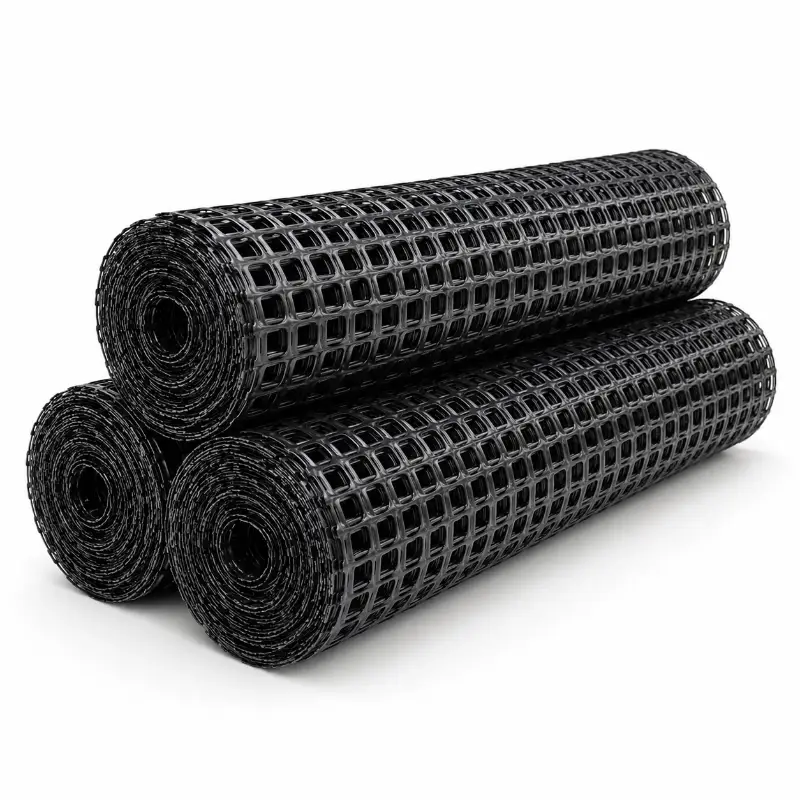
malla elástica de plástico biaxial
Malla de polipropileno para soporte en minería
malla de refuerzo de plástico
malla elástica de plástico biaxial
Malla de polipropileno para soporte en minería
malla de refuerzo de plástico

Malla elástica biaxial de plástico | Malla de plástico antiestática e ignífuga

La malla elástica fabricada mediante el estiramiento simultáneo de materiales poliméricos longitudinal y transversalmente se denomina malla elástica plástica biaxial. Se trata de un material de red plástica ligero, duradero y de alta resistencia. Tras el proceso de estiramiento biaxial, esta red presenta una estructura de cuadrícula estable con una abertura uniforme. Además, posee una buena capacidad de carga y una gran resistencia al agrietamiento, la corrosión y el envejecimiento.
La malla plástica biaxial se fabrica a menudo con polipropileno, pero también puede elaborarse con propiedades ignífugas y antiestáticas. Se utiliza en minas de carbón, sostenimiento subterráneo, refuerzo de estructuras y otras áreas que requieren protección industrial.
  • Ligero y cómodo de transportar
  • Alta resistencia a la tracción en la dirección de la máquina y en la dirección transversal.
  • La abertura de la malla es uniforme y estable.
  • Buena resistencia al fuego
  • El tratamiento superficial antiestático permite su uso seguro en minas.
  • Excelente resistencia a la corrosión y al envejecimiento.
  • Buena estabilidad química
  • Fácil de cortar y atar, cómodo de transportar e instalar.
  • Lavable a máquina y fácil de limpiar.
  • Aplicado para refuerzo, protección, separación y soporte.
Descripción del Producto

1. Especificaciones técnicas

Artículo Especificación
Nombre del producto Malla elástica de plástico biaxial
Material Polipropileno PP
Estructura Malla plástica estirada biaxialmente
Peso del producto 8-80 g/m²
Referencia de densidad 0.918-0.965
Resistencia al calor Aprox. 110°C-130°C
Propiedad de la superficie Antiestático, ignífugo opcional
Dirección de la malla Refuerzo longitudinal y transversal
Personalización Ancho, tamaño de malla, peso, color y resistencia disponibles


2. Referencia de capacidad de producción

Tamaño del equipo Ancho Capacidad de salida Potencia instalada
26 x 5,5 x 4 m 2000 mm 50-80 kg/h 210 kW
38 x 4.8 x 3.5 m 2600 mm 50-100 kg/h 156 kW
45 x 7.5 x 4.2 m 4000 mm 100-120 kg/h 200 kW


3. Material 


4. Ventajas 

4.1 Alta capacidad de carga

4.2 Retardante de llama y antiestático

4.3 Resistencia a la corrosión y al envejecimiento

4.4 Fácil instalación


5. Aplicaciones

Usos comunes:

  • Red de protección para minas de carbón
  • Malla de soporte para construcción subterránea
  • Malla de refuerzo para techos y paredes
  • Malla de refuerzo para yeso de construcción
  • Malla de refuerzo para embalaje
  • red de equilibrio de muelles del colchón
  • Red antipájaros, red de protección contra insectos
  • Red para plantas trepadoras de pepinos, judías y vides.
  • Jaula de separación y cría para acuicultura
  • malla para la prevención de epidemias en el ganado
  • Malla divisoria para animales
  • Red de reverdecimiento de pendientes
  • Malla de anclaje al suelo
  • Red de control de la erosión de la capa vegetal
  • Red de protección para transporte y almacenamiento


6. ¿Por qué elegir la malla elástica de plástico biaxial?


7. Opciones personalizadas

Las opciones de personalización incluyen:

  • Abertura de malla
  • Ancho del rollo
  • Longitud del rollo
  • Peso del rollo
  • Fuerza de ruptura
  • Color
  • Retardante de llama
  • Antiestático
  • Paquete


8. Preguntas frecuentes

P: ¿Qué es una malla elástica plástica biaxial?


P: ¿Dónde se utiliza la malla elástica plástica biaxial?

P: ¿Existe malla ignífuga y antiestática?
Contáctenos para obtener parámetros detallados.

P: ¿Puedo personalizar el tamaño?
A: Sí, puedes. 

Varilla de anclaje hueca 1
Varilla de anclaje hueca 2
icono Noticias relacionadas icono

Noticias relacionadas

Rock Bolt Bearing Plate Purchasing and Assembly Fit

Specify rock bolt bearing plates by verifying bolt and washer fit, hole dimensions, material and finish, load evidence, drawing revision, and assembly checks.
Leer más

Squeezing Ground Support Strategies for Weak Rock Masses

When using squeeze support techniques they differ from normal rock bolting practices due to the rock surrounding your excavation will most likely still deform after you have excavated. If you have a weak rock mass with enough stress applied to it. Tunnels and roadways can become subject to large amounts of convergence. Shotcrete cracks and failure of reinforcement can also occur. The excavation will begin to lose width and height.
Using larger or higher capacity rock bolts or stiffer lining's will not solve this problem.
Proper support needs to be designed to accommodate these rock masses and their ability to deform. Based on the situation you can use different types of support such as. Yielding reinforcement, steel supports that can deform. Shotcrete that can be engineered to yield and support being placed at different stages during excavation. As well as monitoring of the deformation.
You want to allow some movement but be able to keep the excavation safe and workable.
Below are some concepts and types of support used when dealing with squeeze and weak rock masses in underground applications.
Leer más

Using RMR and the Q-System to Select Ground Support

There are many rock mass classification systems used in underground excavations. Some of these systems can be used to give you a general idea on what supports may be required for your excavation. The RMR and Q-system will allow you to assess the rock mass around you and translate that into numbers and information. They can not provide you with a complete support design for your site however.
When working in underground environments you need to have an understanding on what supports may be used in an excavation. Rock bolts, cable bolts, wire mesh, shotcrete and support are all used to keep your excavation standing.
Using RMR you are given a number and information to go off of to help you design supports for your site. The Q-system will give you more information to go off of as it is made up of different categories and can provide support information for your excavation.
Leer más

Ground Support Design: Matching the System to Rock Mass Conditions

Design of ground support should always start from what rock mass you have in front of you. It should never be based on one rock bolts ability to support ground. There are many types of rock mass that will require different support systems. From competent jointed rock, very broken rock mass, squeezing ground and even rockburst ground.
When designing ground support you want to make sure your system can withstand what type of failure you may encounter. Shape of opening, stresses present at the site, ground water and time the support needs to last.
Classifying your rock mass with systems such as RMR, Q and GSI will allow you to determine how good your ground is. These classification systems should be used along side further analysis and checked at site.
Below we will go into detail about matching rock bolts, cable bolts, self drilling anchors, mesh and shotcrete to your ground conditions.
Leer más

Mining Bearing Plate Types: Flat, Domed, and Butterfly Plates Compared

Mining Bearing Plate Types: Flat, Domed, and Butterfly Plates Compared
Leer más

Galvanized vs Bare vs Epoxy-Coated Bolts: Choosing by Design Life

Corrosion protection for rock bolts needs to be taken into account when using them in an underground environment. There are many different factors to consider when deciding whether to use bare steel rock bolts, hot-dip galvanized rock bolts or epoxy coated rock bolts.
Design life, water table and corrosive environment. How will the anchor be installed? Will it be damaged during installation? What inspections will need to be performed. All these will play a role in determining the right corrosion protection to use on your rock bolt.
Bare steel rock bolts can be used on temporary excavations if corrosion is not expected and allowed by the engineer designing the project. Hot-dip galvanized rock bolts have zinc coating which can increase the life of your rock bolt in certain environments. Epoxy coated rock bolts are another option they just depend on what the coating will come into contact with and if there's any damage during install.
As long as you choose the correct corrosion protection for your design life your fine.
Below we will cover all three types of rock bolts and what to consider when buying rock bolts for underground applications.
Leer más
icono servicio icono
Servicio relacionado
servicioslcon 1

Soluciones integrales de soporte en tierra

Ofrecemos soporte completo para aplicaciones de refuerzo subterráneo, que abarca: Sistemas de soporte para techos y paredes laterales en minas Soluciones de refuerzo de túneles Soporte de ingeniería para la estabilización de taludes Sistemas de anclaje de cimientos Sistemas estructurales de seguridad subterránea Desde la planificación inicial del proyecto hasta su aplicación in situ, ayudamos a nuestros clientes a construir entornos subterráneos más seguros y estables.

servicioslcon 3

Suministro de productos e integración de sistemas

Wanfeng ofrece un sistema de suministro de productos totalmente integrado, que permite a los clientes obtener todos los materiales de apoyo en tierra de un único proveedor: Sistemas de pernos de roca (resina / PRFV / roscados) Pernos para cables y sistemas de anclaje Arcos de acero y sistemas de soporte de acero en I Malla de alambre y malla de refuerzo Placas, tuercas, tornillos y componentes de fijación Materiales de anclaje de resina y cemento Herramientas y accesorios consumibles para minería Nuestra capacidad de suministro integral reduce la complejidad de las adquisiciones y mejora la eficiencia de los proyectos.

servicioslcon 4

Servicios de fabricación y control de calidad

Garantizamos un rendimiento estable y fiable del producto mediante estrictos sistemas de fabricación y control de calidad: Procesos de producción estandarizados Inspección y control de materias primas Pruebas de rendimiento mecánico Verificación de la capacidad de carga y la resistencia a la tracción Inspección de consistencia de lotes Inspección de calidad final antes del envío Todos los productos están diseñados para cumplir con los exigentes requisitos de seguridad para trabajos subterráneos.

servicioslcon 5

Servicios de ingeniería a medida y OEM

También ofrecemos soluciones personalizadas para diferentes proyectos de minería e ingeniería: Especificaciones personalizadas para pernos de roca Diseño de soporte de acero no estándar Estructuras especiales de malla y refuerzo Configuración de productos basada en proyectos Cooperación OEM/marca privada Trabajamos en estrecha colaboración con socios internacionales para desarrollar soluciones a medida para entornos subterráneos complejos.

servicioslcon 6

Soporte global de suministro y logística

Con una sólida experiencia en exportaciones, ofrecemos un servicio de entrega global eficiente y soporte para la cadena de suministro: Normas internacionales de embalaje para la exportación Optimización de la carga de contenedores Soporte de envío multirregional Planificación de producción rápida para proyectos urgentes Acuerdos de suministro estables a largo plazo Garantizamos un servicio de entrega fiable para proyectos mineros en diferentes países y regiones.

servicioslcon 7

Servicio posventa y soporte a largo plazo

Brindamos soporte a nuestros clientes durante todo el ciclo de vida del proyecto: Soporte de documentación técnica Asistencia para la instalación Soporte para reemplazo de productos Continuidad del suministro a largo plazo Consultoría de ingeniería para la expansión del proyecto. Nuestro objetivo es construir relaciones de colaboración a largo plazo, no solo transacciones puntuales.

icono Mensaje icono

Contáctanos

    Productos
    Contactos
    WhatsApp
    Correo electrónico