Water expansion rock bolt
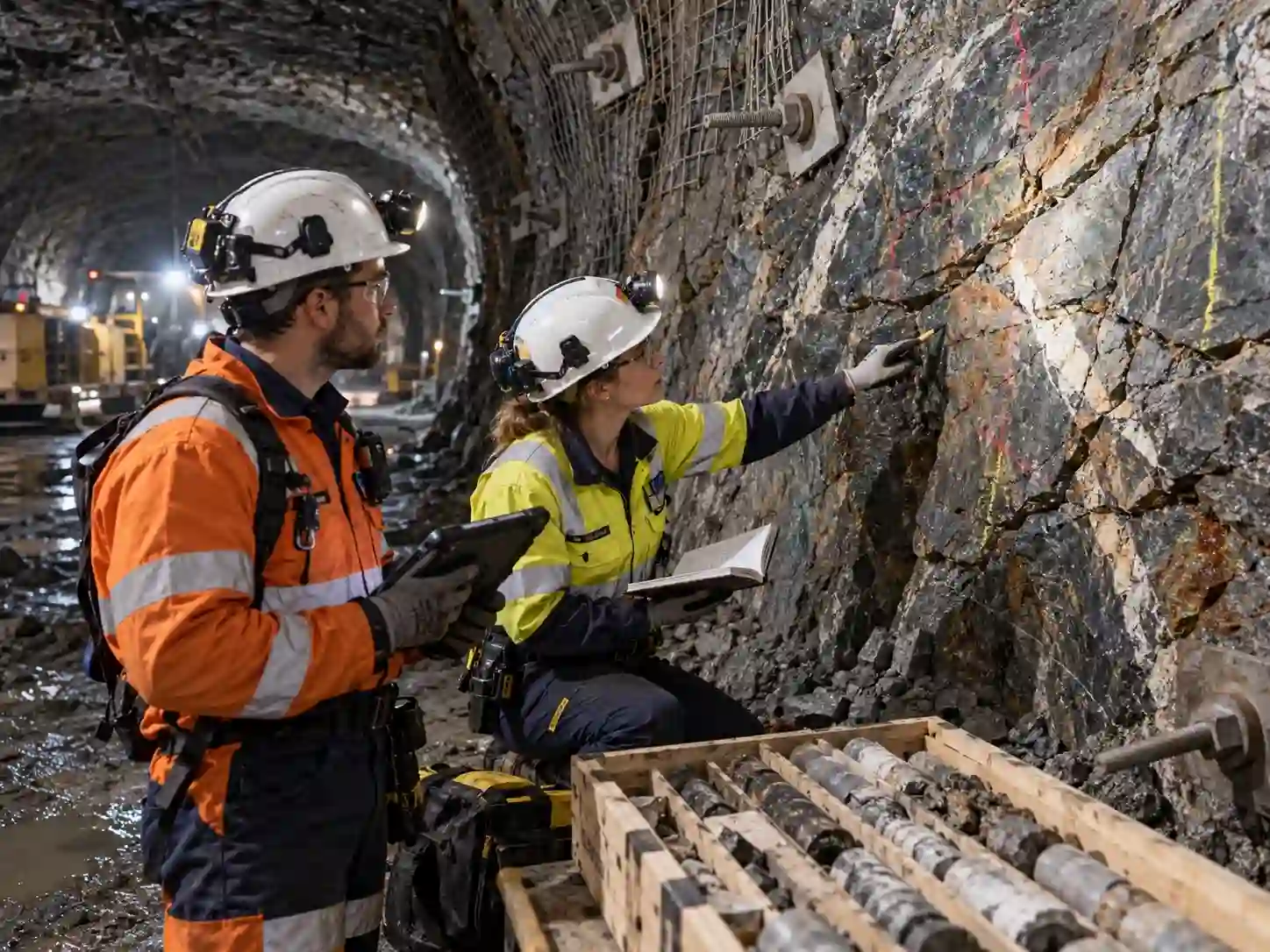
Mine worker installing water expansion rock bolts for underground rock support
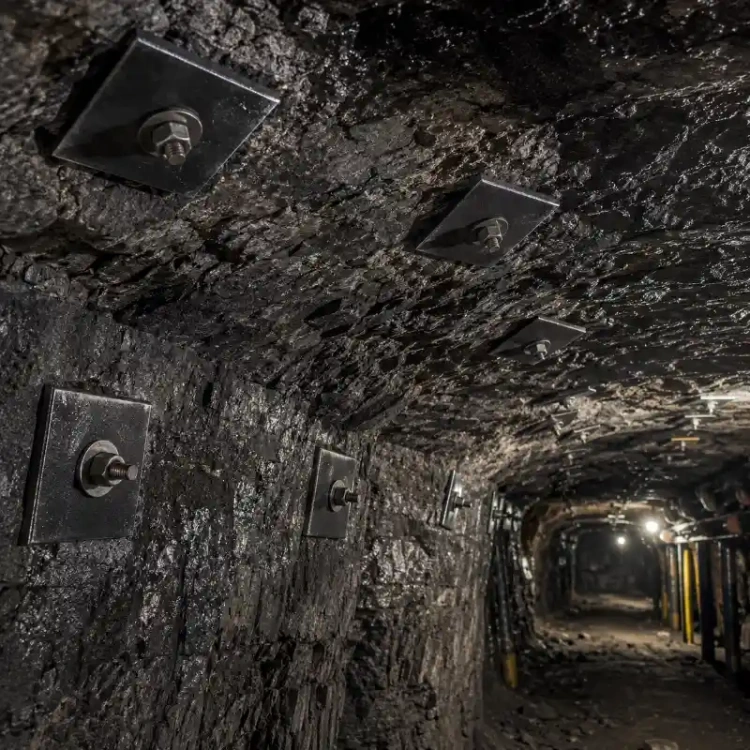
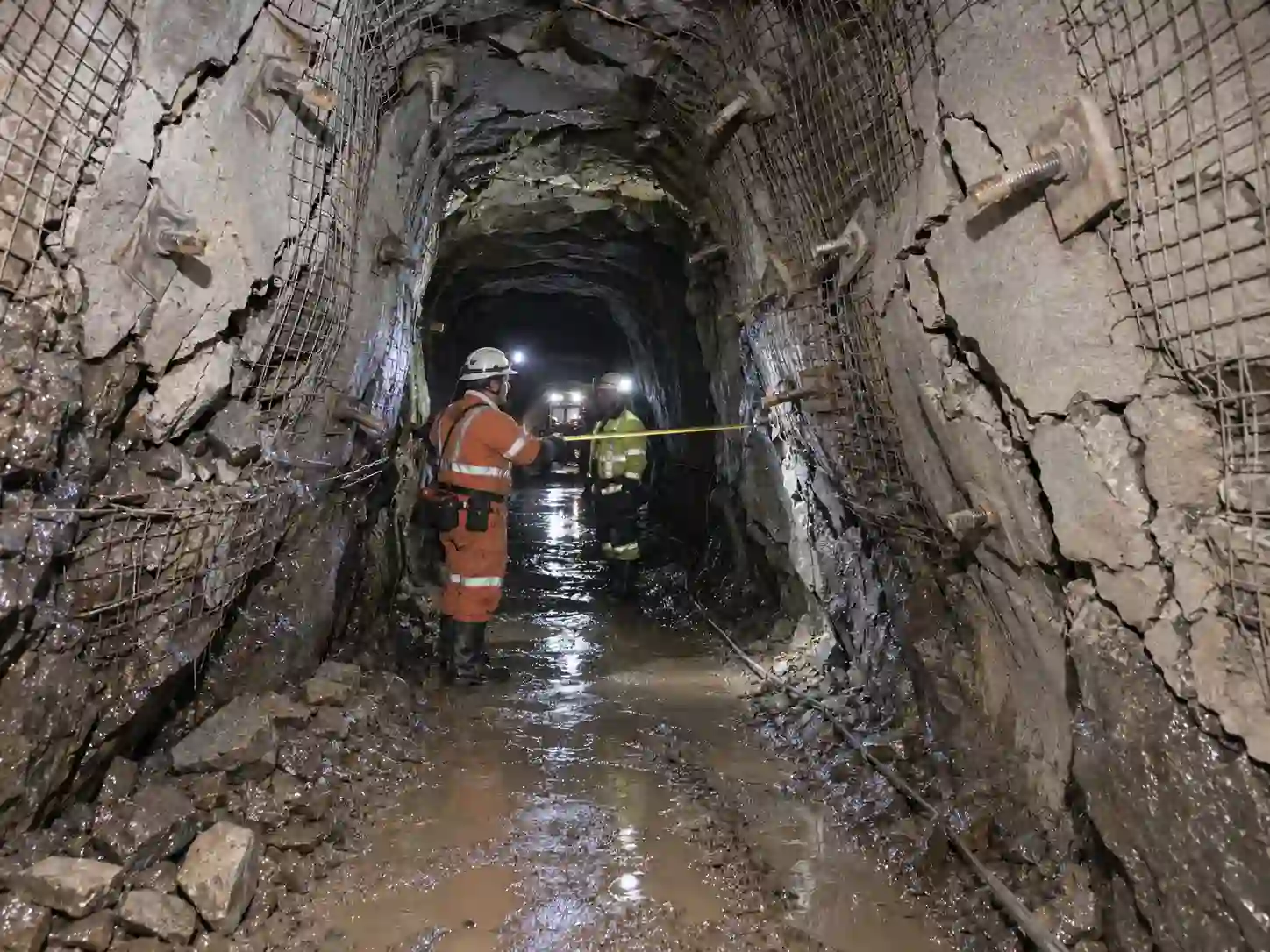
Water expansion rock bolts installed with wire mesh and shotcrete in a tunnel
Water expansion rock bolt
Mine worker installing water expansion rock bolts for underground rock support
Water expansion rock bolts installed with wire mesh and shotcrete in a tunnel

Water Expansion Rock Bolt

Water Expansion Rock Bolt is also known as expandable rock bolt, which is used for immediate reinforcement of underground mines and tunnels. Installation of the bolt only requires water and does not involve any chemical materials. This type of rock bolt provides safe and environmentally friendly underground support.

After applying water pressure, the bolt expands in the borehole wall to form frictional anchorage against the surrounding rock. Water expansion rock bolts are commonly used to enhance construction speed, simplify installation procedure, and provide immediate ground support underground.
  • Quick expansion with water pressure
  • Doesn't require resin, cement or chemical agent
  • Provides immediate support after expansion
  • Ideal for underground mining and tunnel support
  • Chemical-free anchoring method
  • Available in different sizes and load capacities
  • Made to custom specification upon request
Product Description

1.Technical Parameters


Item Specification
Product Name Water Expansion Rock Bolt
Bolt Diameter 28 mm / 38 mm
Profile Diameter 27.5 mm / 36 mm
Material Thickness 2 mm / 3 mm
Upper Sleeve Diameter 28 mm / 38 mm
Expansion Tube Diameter 30/37 mm, 41/48 mm
Borehole Diameter 32-39 mm, 43-52 mm
Minimum Breaking Load 120 kN / 160 kN / 240 kN / 230 kN
Minimum Elongation 10% / 20%
Typical Elongation 15% / 30%
Standard Length 1.5-4.0 m / 2.4-6.0 m
Customization Available

Note:
Custom sizes are available upon request.


2. Applications


Underground mines
Tunnels
Rock roadways
Slopes and caverns
Temporary / Permanent ground support
Fast excavation support


3. How Does it Work?


4. Benefits of Using

4.1 No Chemical Materials Needed: For expansion you only need water. 
4.2 Immediate Ground Support:
4.3 Safe and Environmentally Friendly:
4.4 Stable Frictional Anchoring:
4.5 Available in Different Sizes:


5. Installation Instructions


6. FAQ


6.2 Is resin or cement required?
No. 

6.3 Can it be used for immediate support?
Yes. 

6.4 What drill bit size is required?

6.5 Are custom sizes available?
Yes. Custom specifications can be discussed upon request.


Hollow anchor rod 1
Hollow anchor rod 2
icon Related News icon

Related News

Rock Bolt Bearing Plate Purchasing and Assembly Fit

Specify rock bolt bearing plates by verifying bolt and washer fit, hole dimensions, material and finish, load evidence, drawing revision, and assembly checks.
Read More

Squeezing Ground Support Strategies for Weak Rock Masses

When using squeeze support techniques they differ from normal rock bolting practices due to the rock surrounding your excavation will most likely still deform after you have excavated. If you have a weak rock mass with enough stress applied to it. Tunnels and roadways can become subject to large amounts of convergence. Shotcrete cracks and failure of reinforcement can also occur. The excavation will begin to lose width and height.
Using larger or higher capacity rock bolts or stiffer lining's will not solve this problem.
Proper support needs to be designed to accommodate these rock masses and their ability to deform. Based on the situation you can use different types of support such as. Yielding reinforcement, steel supports that can deform. Shotcrete that can be engineered to yield and support being placed at different stages during excavation. As well as monitoring of the deformation.
You want to allow some movement but be able to keep the excavation safe and workable.
Below are some concepts and types of support used when dealing with squeeze and weak rock masses in underground applications.
Read More

Using RMR and the Q-System to Select Ground Support

There are many rock mass classification systems used in underground excavations. Some of these systems can be used to give you a general idea on what supports may be required for your excavation. The RMR and Q-system will allow you to assess the rock mass around you and translate that into numbers and information. They can not provide you with a complete support design for your site however.
When working in underground environments you need to have an understanding on what supports may be used in an excavation. Rock bolts, cable bolts, wire mesh, shotcrete and support are all used to keep your excavation standing.
Using RMR you are given a number and information to go off of to help you design supports for your site. The Q-system will give you more information to go off of as it is made up of different categories and can provide support information for your excavation.
Read More

Ground Support Design: Matching the System to Rock Mass Conditions

Design of ground support should always start from what rock mass you have in front of you. It should never be based on one rock bolts ability to support ground. There are many types of rock mass that will require different support systems. From competent jointed rock, very broken rock mass, squeezing ground and even rockburst ground.
When designing ground support you want to make sure your system can withstand what type of failure you may encounter. Shape of opening, stresses present at the site, ground water and time the support needs to last.
Classifying your rock mass with systems such as RMR, Q and GSI will allow you to determine how good your ground is. These classification systems should be used along side further analysis and checked at site.
Below we will go into detail about matching rock bolts, cable bolts, self drilling anchors, mesh and shotcrete to your ground conditions.
Read More

Mining Bearing Plate Types: Flat, Domed, and Butterfly Plates Compared

Mining Bearing Plate Types: Flat, Domed, and Butterfly Plates Compared
Read More

Galvanized vs Bare vs Epoxy-Coated Bolts: Choosing by Design Life

Corrosion protection for rock bolts needs to be taken into account when using them in an underground environment. There are many different factors to consider when deciding whether to use bare steel rock bolts, hot-dip galvanized rock bolts or epoxy coated rock bolts.
Design life, water table and corrosive environment. How will the anchor be installed? Will it be damaged during installation? What inspections will need to be performed. All these will play a role in determining the right corrosion protection to use on your rock bolt.
Bare steel rock bolts can be used on temporary excavations if corrosion is not expected and allowed by the engineer designing the project. Hot-dip galvanized rock bolts have zinc coating which can increase the life of your rock bolt in certain environments. Epoxy coated rock bolts are another option they just depend on what the coating will come into contact with and if there's any damage during install.
As long as you choose the correct corrosion protection for your design life your fine.
Below we will cover all three types of rock bolts and what to consider when buying rock bolts for underground applications.
Read More
icon service icon
Related service
serviceslcon 1

End-to-End Ground Support Solutions

We deliver complete support for underground reinforcement applications, covering: Mining roof and sidewall support systems Tunnel reinforcement solutions Slope stabilization engineering support Foundation anchoring systems Underground safety structural systems From early-stage project planning to on-site application, we help customers build safer and more stable underground environments.

serviceslcon 3

Product Supply & System Integration

Wanfeng provides a fully integrated product supply system, enabling customers to source all ground support materials from one supplier: Rock bolt systems (resin / FRP / threaded) Cable bolts & anchoring systems Steel arches & I-steel support systems Wire mesh & reinforcement mesh Plates, nuts, bolts & fastening components Resin & cement anchoring materials Mining tools & consumable accessories Our one-stop supply capability reduces procurement complexity and improves project efficiency.

serviceslcon 4

Manufacturing & Quality Assurance Services

We ensure stable and reliable product performance through strict manufacturing and quality control systems: Standardized production processes Raw material inspection and control Mechanical performance testing Load-bearing and tensile strength verification Batch consistency inspection Final quality inspection before shipment Every product is engineered to meet demanding underground safety requirements.

serviceslcon 5

Custom Engineering & OEM Services

We also support customized solutions for different mining and engineering projects: Customized rock bolt specifications Non-standard steel support design Special mesh and reinforcement structures Project-based product configuration OEM / private label cooperation We work closely with global partners to develop tailored solutions for complex underground environments.

serviceslcon 6

Global Supply & Logistics Support

With strong export experience, we provide efficient global delivery and supply chain support: International export packaging standards Container loading optimization Multi-region shipping support Fast production scheduling for urgent projects Stable long-term supply agreements We ensure reliable delivery to mining projects across different countries and regions.

serviceslcon 7

After-Sales & Long-Term Support

We support customers throughout the entire project lifecycle: Technical documentation support Installation guidance assistance Product replacement support Long-term supply continuity Engineering consultation for project expansion Our goal is to build long-term partnerships, not just single transactions.

icon Message icon

Contact Us

    Products
    Contacts
    WhatsApp
    Email