

-
 admin
- 22nd Sentabr 2026
 admin
Conveyor Idler Roller Essentials: How to Improve Belt Conveyor Performance in Mining Operations
The operation of a mining belt conveyor depends on many components. While attention is primarily focused on the belt and the drive, the rollers supporting the belt below it have an equally large impact on the operational performance of the conveyor. A conveyor may be equipped with hundreds or even thousands of rollers. Should too many of these be running poorly, increased resistance, higher wear on the belt, more vibration and more maintenance will be the consequences.
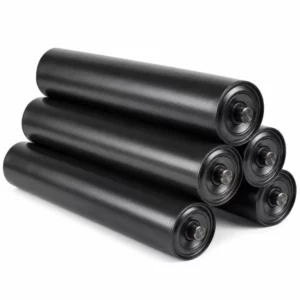
That is why a reliable Conveyor Idler Roller matters in mining operations. It supports the belt, helps material move steadily, and gives the conveyor a rolling surface instead of forcing the belt to slide over fixed supports.
When it comes to mines, quarries, coal handling and long distance material transport the quality of the rollers used cannot be left to chance. Small differences in radial runout, bearing protection, seal and rotational resistance can be crucial over long operating hours.
Why Do Conveyor Idler Rollers Matter to Belt Conveyor Performance?
A conveyor idler roller has a simple job: support the belt and rotate as the belt moves. The difficulty is doing that reliably under load, dust, moisture, vibration, and continuous use.
When the roller rotates smoothly, the belt receives more stable support. When it starts to drag or move unevenly, the effect is passed directly to the belt.
Stable Rotation Helps Keep the Belt Running Smoothly
A roller should rotate around its center with as little unwanted movement as possible. If the tube is not round enough, the shaft is not straight, or the assembly is poorly controlled, the roller surface can move up and down during rotation.
That movement may appear small when you look at one roller. Across a long conveyor, it can contribute to belt vibration and uneven support.
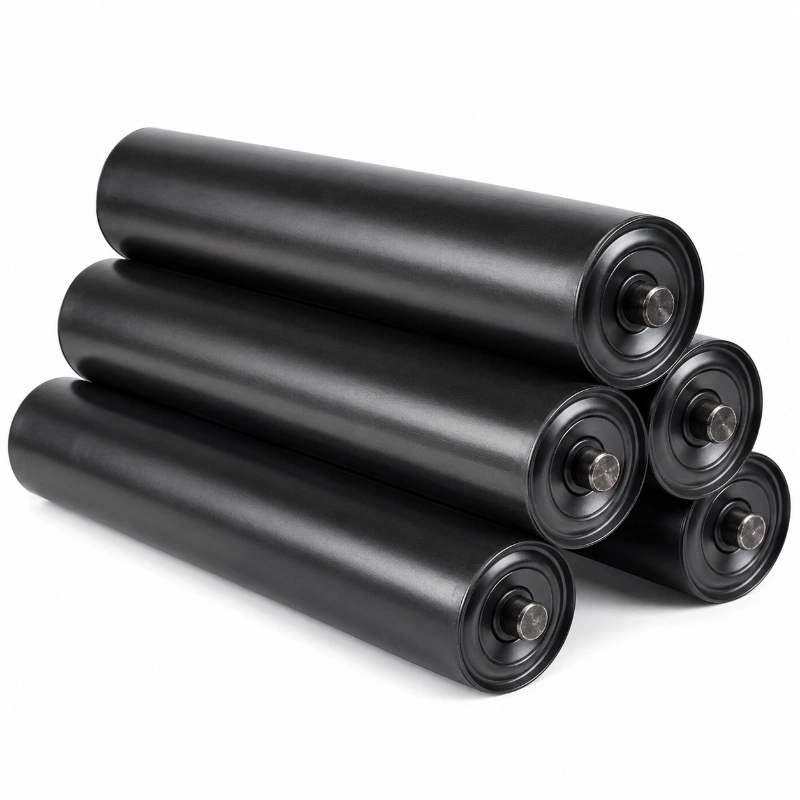
The conveyor rollers discussed here use high-precision cold-drawn steel shafts and high-frequency welded steel tubes with controlled wall thickness, roundness, and straightness. Radial runout can be controlled within 0.35 mm, helping the roller provide a steadier surface for the belt.
Low Rotating Resistance Reduces Unnecessary Load
Every roller creates some resistance when it turns. In a short conveyor, the difference between one good roller and one poor roller may not seem large. In a long mining conveyor with many rollers, the total resistance matters much more.
A roller that turns freely reduces unnecessary drag on the belt. That can help the drive system work with less wasted effort.
This does not replace correct belt tension, alignment, or conveyor design. It simply removes one source of avoidable resistance.
What Common Problems Reduce Conveyor Performance in Mines?
Mining sites are not easy places for conveyor components. Dust, water, mud, abrasive material, heavy loading, and long operating hours are normal.
A roller that works well in a clean workshop may not last long in an underground roadway or quarry conveyor unless its internal parts are properly protected.
Dust and Water Can Damage the Bearing Area
Bearings need lubrication and protection. If dust, water, or small particles enter the bearing area, rotation can become rougher. Wear may increase and the roller can eventually become stiff or seize.
A labyrinth sealing structure helps reduce this risk by creating a longer path between the outside environment and the bearing area. Long-life lithium-based grease is also used to support stable bearing operation.
The product specification includes a 72-hour waterproof test with zero water ingress. That matters in wet underground areas, coal handling systems, outdoor conveyors, and other places where moisture is difficult to avoid.
Excessive Runout Can Add Vibration
Runout is often overlooked because it is not as visible as a broken belt or failed bearing. Still, it affects how the belt sits on the roller.
A roller with excessive radial movement can create repeated movement at the belt surface. With many rollers working together, that can make the conveyor feel less stable.
Keeping radial runout within a controlled range helps the belt move with less unnecessary vertical movement.
Poor Rotation Can Increase Energy Use
A conveyor drive has to overcome the resistance of every moving part in the system.
If rollers begin to rotate poorly, they add drag. A few stiff rollers may not cause an obvious problem immediately, but the effect can grow as more units deteriorate.
The low rotating resistance design is therefore useful for long conveyors and systems that operate for extended periods. Lower roller resistance helps reduce avoidable power loss and keeps the belt moving more freely.
How Does Roller Construction Affect Conveyor Efficiency?
Good roller performance usually comes from ordinary manufacturing details being controlled properly. There is no need for complicated features if the shaft, tube, bearings, seals, and lubricant all do their jobs.
The Shaft and Tube Need Good Accuracy
The shaft supports the roller and helps keep the bearing assembly aligned. The tube provides the surface that supports the belt.
High-precision cold-drawn steel shafts are used together with high-frequency welded steel tubes. Uniform tube wall thickness, roundness, and straightness help reduce uneven rotation.
These details are easy to miss when rollers are compared only by price, diameter, and length. They become more important after months of continuous operation.
Bearing Protection Has a Direct Effect on Service Life
The bearing housing and dust cover are made from stamped steel, while the labyrinth sealing system helps limit contamination.
This is important because bearing damage often leads directly to roller failure. Once a bearing becomes rough or stiff, rotating resistance increases and the roller may start creating heat, noise, or belt wear.
Protecting the bearing area is therefore one of the simplest ways to keep a conveyor roller working longer.
A Smooth Roller Surface Helps Protect the Belt
The belt is one of the more expensive parts of a conveyor system, so unnecessary belt damage should be avoided where possible.
The roller surface is processed to reduce damage to the conveyor belt. Combined with low radial runout and stable rotation, this gives the belt a more consistent supporting surface.
Of course, roller quality is only one part of belt protection. Belt tracking, loading position, tension, cleaners, and maintenance also matter. Still, a damaged or poorly rotating roller can create problems even when the rest of the conveyor is set up correctly.
Which Roller Details Matter for Long-Term Operation?
A good roller still has to fit the conveyor. Using the wrong dimensions or bearing configuration can cause problems even if the roller itself is well made.
This is why project buyers should work from conveyor drawings, existing roller samples, or clear technical specifications.
Roller Diameter and Length Must Match the System
Available roller diameters range from 63.5 mm to 219 mm. Standard lengths range from 150 mm to 3500 mm, depending on the conveyor design.
Different diameters are also supplied with different shell thicknesses and bearing models. That gives more flexibility for various mining and industrial conveyor layouts.
The final size should follow the actual conveyor requirements rather than a general recommendation.
Shaft, Bearing, and Seal Should Be Treated as One Assembly
A roller is not just a steel tube.
The shaft supports the structure. Bearings allow rotation. Seals protect the bearings. Grease supports long-term operation. These parts need to match each other.
Customization can cover roller diameter, roller length, shell thickness, shaft diameter, bearing model, seal structure, surface coating, roller type, and packing method.
This is useful when you are replacing rollers in an existing system because the new unit can be produced around confirmed drawings or dimensions instead of changing the conveyor around a standard roller.
Where Do Conveyor Idler Rollers Make the Biggest Difference?
Mining conveyors are one of the clearest applications because they combine continuous operation with harsh working conditions.
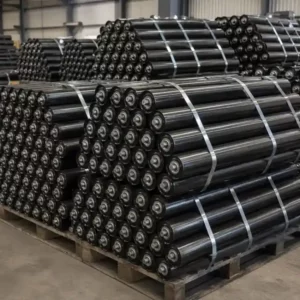
Coal mining conveyors, underground and surface mines, quarry and aggregate plants, cement lines, steel plants, power plants, ports, sand and gravel systems, chemical plants, and long-distance belt conveyors all use idler rollers to support bulk material transport.
Coal and Underground Mining
Coal and underground sites often have high dust levels and limited access for maintenance.
If a roller fails deep inside a mine, replacing it can take more time than changing the same component in an open workshop. That makes sealing, bearing protection, and service life especially important.
Surface Mining and Quarrying
Surface conveyors face different conditions. Dust may be severe during dry weather, while rain and wet material create another challenge.
Heavy stone and aggregate can also put more stress on conveyor components. Stable rollers help keep the belt supported during continuous bulk transport.
Long-Distance Conveyors
Long conveyors make small efficiency differences more noticeable.
When hundreds or thousands of rollers operate together, low rotating resistance becomes more valuable. The same applies to radial runout and bearing condition.
The service life of these rollers is generally stated at not less than 30,000 hours, which can help reduce replacement frequency and maintenance interruptions.
How Can Hebei Wanfeng Support Mining Conveyor Projects?
Xebey Vanfeng is a manufacturer with more than 10 years of experience in production, R&D, and global supply for mining-related products. Its work covers mining, tunneling, underground engineering, slope stabilization, foundation reinforcement, and other demanding industrial applications. The company works with overseas mines, contractors, importers, and distributors that need stable product supply and manufacturing based on confirmed technical requirements.
For conveyor projects, the practical advantage is customization. If you have an existing conveyor drawing or roller sample, the manufacturer can work with your required diameter, length, shell thickness, shaft size, bearing model, sealing arrangement, and other confirmed dimensions.
That helps when you are replacing rollers on an existing conveyor or purchasing larger quantities for a mining project.
The company also provides xizmat ko'rsatishni qo'llab-quvvatlash for customized production, inspection requirements, export packing, documentation, and international supply. Production and inspection can follow agreed specifications, which is important when you need repeat orders to remain consistent.
If you are preparing a quotation request, it helps to send your roller dimensions, bearing model, quantity, operating conditions, drawings, and delivery destination at the beginning. You can send these requirements directly to the contact team for specification checking and quotation.
TSS
What Is a Conveyor Idler Roller Used For?
A conveyor idler roller supports the conveyor belt and helps material move smoothly along the belt conveyor system.
What Diameters Are Available for Conveyor Idler Rollers?
Common diameters range from 63.5 mm to 219 mm, while custom dimensions can also be produced according to conveyor requirements.
Are Conveyor Idler Rollers Suitable for Dusty and Wet Mining Sites?
Yes. The rollers use a labyrinth sealing structure and long-life grease to help protect the bearing area from dust and water.
Can Conveyor Idler Rollers Be Customized for an Existing Conveyor?
Yes. Diameter, length, shell thickness, shaft diameter, bearing model, sealing structure, surface coating, roller type, and packing method can be customized according to confirmed drawings or specifications.
How Do Conveyor Idler Rollers Help Improve Belt Conveyor Performance?
Low radial runout supports steadier belt movement, low rotating resistance reduces unnecessary drag, good sealing protects bearings, and a smooth roller surface helps limit belt damage.
 Tegishli




Har doim ajoyib xizmat