
-
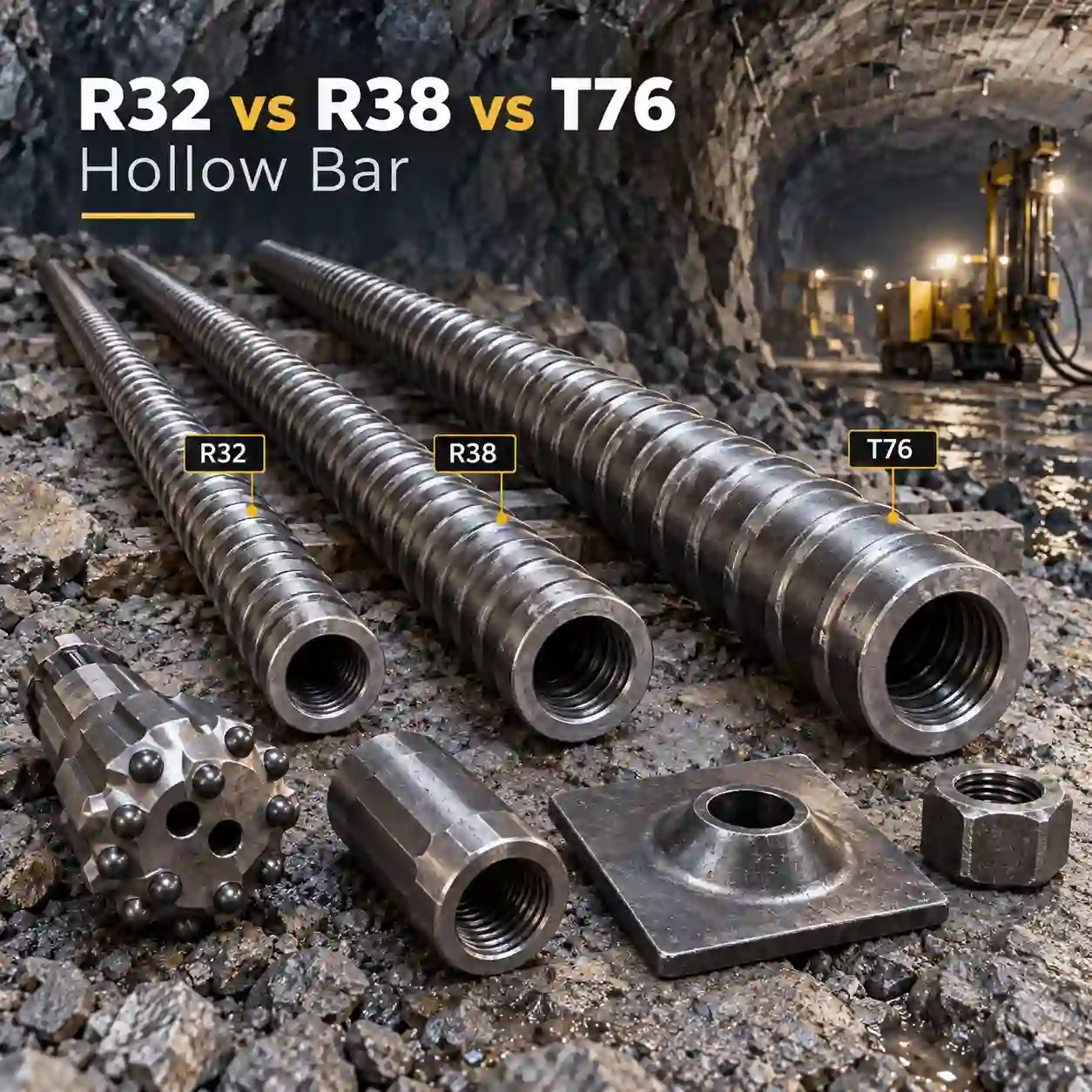 R32, R38, T76 Hollow Bar: How to Pick the Right Thread and Load Class
- 28th Setembro 2026
R32, R38, T76 Hollow Bar: How to Pick the Right Thread and Load Class
What Do R and T Mean?
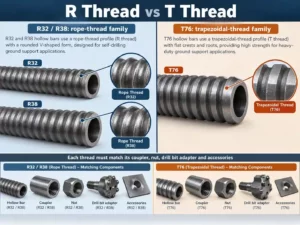
These letters dont just mean different series of products.
They are important when you are dealing with hollow-bars/rock-drillings. The thread on these bars will have to match up with other components such as.
- Acopladores
- Nozes
- Drill bits
- Adapters
- Installation equipment
R Threads
Most R Series hollow bars will be rope threaded. Such as R32, R38 etc.
Rope thread left hand dimensioning and tolerances are covered by ISO 10208. This standard applies to percussive drilling rock drills.
You will find most industry references list R25 – R51 as Rope Threaded Hollow Bars.
T Threads
Some larger sizes will fall under the T designation.
T76 would be considered a Trapezoidal Threaded Hollow Bar and not an R style rope thread.
So keep this in mind when requesting T76 couplings etc. Just because it’s similar in size to another system doesnt mean they are interchangeable.
Always make sure you know what your asking for on international rfq’s. Don’t simply state I need 76mm hollow bars. Specify what system your using and include a thread print if needed.
R32 vs R38 vs T76: Quick Comparison
| Item | R32 | R38 | T76 |
| Typical thread family | Rope thread | Rope thread | Trapezoidal-type thread commonly used in hollow-bar systems |
| Relative system size | Light / medium | Medium / higher load | Heavy duty |
| Typical use | Rock reinforcement, tunnels, slopes, mining | Higher-load hollow-bar reinforcement | Heavy underground, tunnel, cavern and infrastructure anchoring |
| Grout passage | Yes | Yes | Yes |
| Extension by coupler | Yes | Yes | Yes |
| Main selection reason | Compact system and moderate loads | Higher load without moving to very large bar | High structural load requirement |
| Key mistake to avoid | Selecting by diameter alone | Assuming every R38 has same capacity | Using T76 where smaller system already meets design |
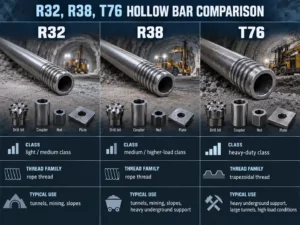
These are not general ratings across all types of system.
How much load a bar can take will vary depending on the thickness of wall, inside bore size, size of steel section and grade of product.
R32 Hollow Bar: Compact System, Multiple Load Classes
Wanfeng’s current R32 Hollow Grouting Anchor Bar page lists several R32 variants with the same 32 mm nominal outer diameter but different internal diameters and steel cross-sections.
So as you can see two r32 bars may not have the same loading rating.
Some values listed on the Wanfeng site.
| R32 Variant | Diâmetro interno | Cross-Section | Carga de rendimento | Carga máxima |
| R32N/21 | 21 mm | 363 mm2 | 230 kN | 280 kN |
| R32N/18.5 | 18,5 mm | 433 mm2 | 230 kN | 280 kN |
| R32S | 17 mm | 440 mm2 | 280 kN | 360 kN |
| R32SS | 15 mm | 522 mm2 | 300 kN | 405 kN |
As you go down in diameter of the bore hole and increase the steel section the bar will achieve a higher class.
Therefore when just stating R32 it does not specify what type you want.
A purchase order should state which variation of R32 you require and what properties it needs to have.
When would I use R32?
Some applications that you could use R32 in would be
- tunnelling
- roadways in mine
- rock slopes
- anchoring for foundations
- broken rock
- ground with high water content.
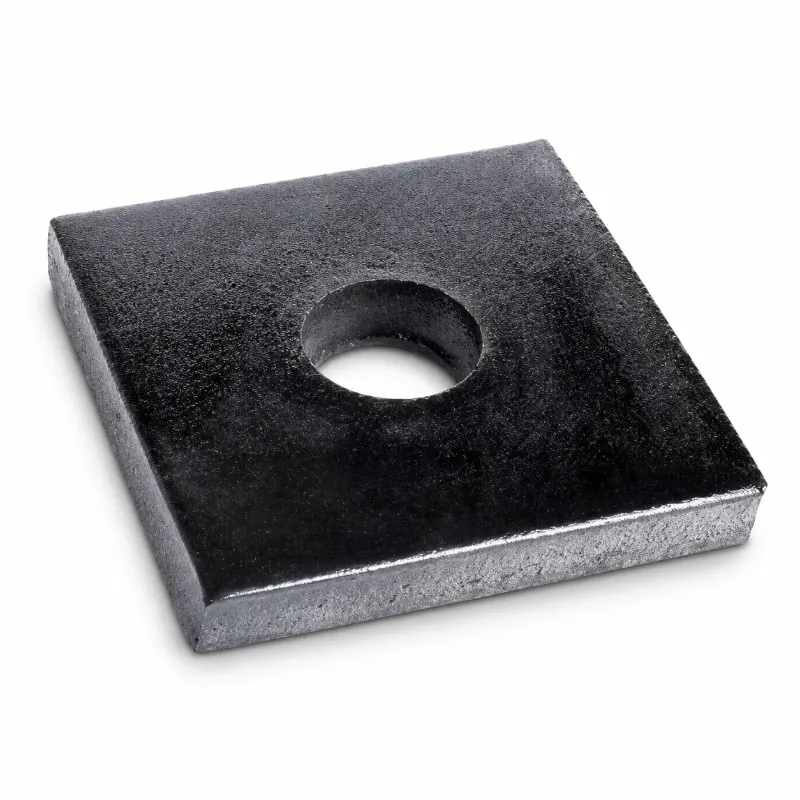
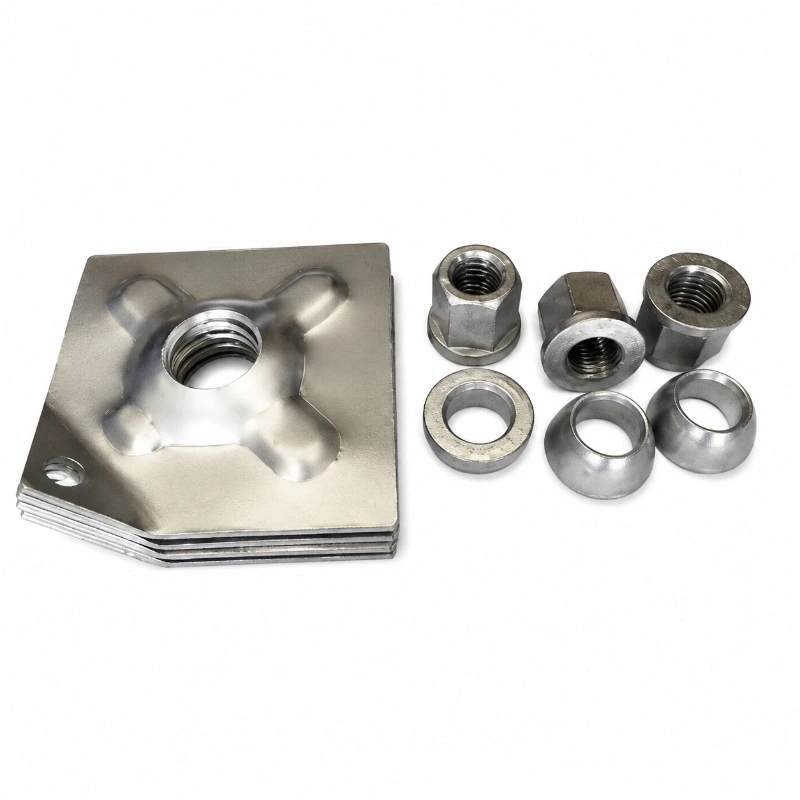
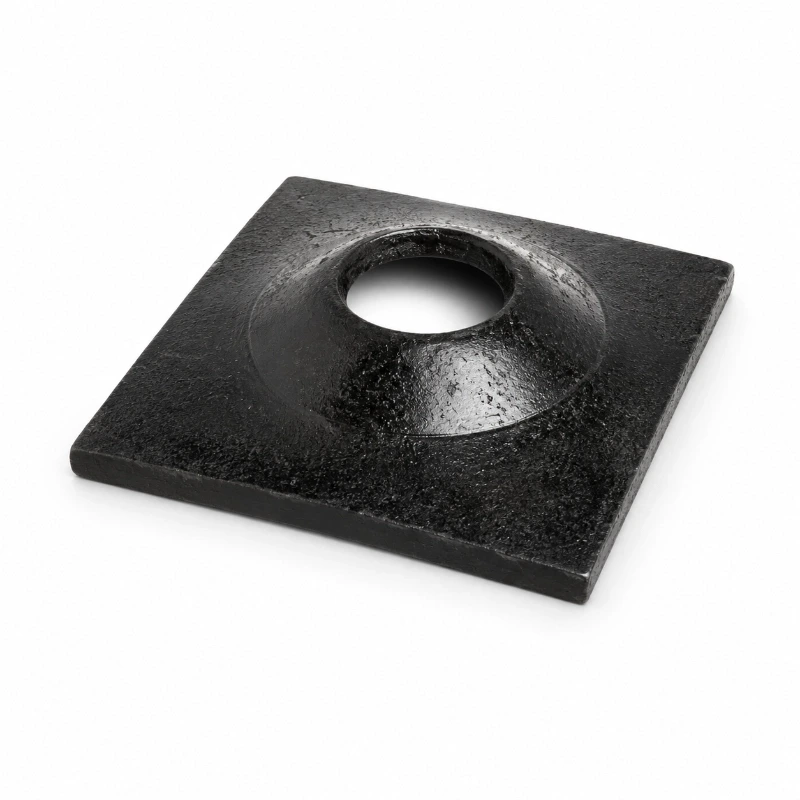
We stock all associated products for our R32 range such as nuts couplers bearing plates centralisers and bits.
R38 Hollow Bar: The Step Between R32 and Larger Systems
Gives you more rope thread then what you have with an R32 but not quite as big as a T76.
As Wanfeng does not appear to have a R38 listed on any pages i have been able to find these numbers will be generic and not Wanfeng related.
Some hollow bar sizes that Epiroc currently use that can be considered R38.
| R38 Example | Carga de rendimento | Carga máxima |
| R38 Class 1 | 400 kN | 500 kN |
| R38 Class 2 | 450 kN | 550 kN |
The point isn’t what the actual number is.
Its that R38 is also a variable load class similar to R32.
So
R38 is not equal to a set load.
When specifying a product to be R38 you should state on the RFQ:
Minimum Yield Load
Minimum Ultimate Load
- ID of bar
- Weight per meter
- Comprimento da barra
- Left hand or Right hand threads
- If a Coupler is required.
Wanfeng will have many products under their Rock Bolting & Anchoring Systems tab that would suit your needs. Not automatically think of an R38 product from another manufacturer.
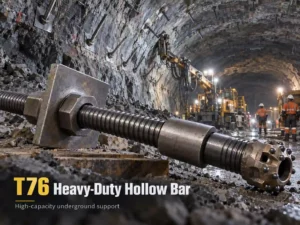
T76 Hollow Bar: A Heavy-Duty Load Class
The T76 is a much higher class.
As of now we have 2 types of T76 Hollow Grouting Anchor Bar listed on our website.
| T76 Variant | Diâmetro interno | Cross-Section | Carga de rendimento | Carga máxima |
| T76N | 51 mm | 2,000 mmsimples | 1,200 kN | 1,600 kN |
| T76S | 47 mm | 2,400 mmsimples | 1,500 kN | 1,900 kN |
Why Thread Size Alone Does Not Define Load Capacity
R32 for example.
There are various sizes of R32 all have the same thread OD but differ in area of steel.
As you can see when you have less steel your able to carry less load.
This goes for all sizes of hollow bar.
Simply put if you have more area of steel with the right grade of steel you will have a higher tensile strength.
However this is only for the bar.
When installed as an anchor you need to consider.
- Grout
- Length of bond
- Ground it is being used in
- Acopladores
- Placa de apoio
- Hole it is installed in
- Corrosion
- installation quality
So just because you have a 1,900KN bar doesn’t mean you will get 1,900KN out of your anchor.
Its all about what the ground and anchorage can transfer.
Yield Load vs Ultimate Load: Which Number Matters?
They both apply just to different criteria.
Carga de rendimento
Yield load will represent the load that will cause yielding in the steel.
In most applications its more beneficial to quote yield loads for your design rather than ultimate load.
Carga máxima
Ultimate load will be the breaking point of tensile strength for the bar being tested.
You should not assume ultimate load as a working load.
Your load will need to factor in:
What engineering code your project will require;
- Factors of safety;
- Ground conditions;
- Test criteria;
- Design life.
So always have your RFQ’s reflect min yield load and min ultimate load instead of stating i need a “500 kN bar”.
How to Choose Between R32 and R38
There is many reasons why you would use one over the other. It all starts with your load requirement.
If your load requirement falls under what an R32 bar can provide. You will end up paying more money to go to an R38. Your going to be buying a larger bar, which will equate to larger accessories and holes to drill. With no benefit to your project.
You would want to use an R38 when your load requirement exceeds the usable applications for R32. Or if your drilling package supports R38.
Always determine your load requirement and see if you can work with R32. If you cant then look at using an R38.
When Does T76 Become Justified?
Once your design requirements call for a much higher class of reinforcement.
You may need to look into using a T76. Such as large opening’s underground or applications that require a large load on your bars.
But again if your able to use R32 or R38 and meet your design requirements. Then you’re paying for the extra bar and accessories that may not be needed for your application.
Thread Compatibility Matters as Much as Load
Hollow bar anchor is a complete system.
You need to ensure your bar size can match with:
Drill bit – Bar – Coupler – Nut – Plate & Adapters to install it.
As you can see in the image below Wanfeng offers R32 system which they have listed drill-bit adapters that will allow them to connect there R32 anchor thread to R38, R51 T40 or T52. WF Ground Support
So there can be a difference between what drilling tool your using and what size your anchor bar is.
If your RFQ only states.
“We use R38 drilling machines”
It doesn’t mean your anchor has to be R38.
You would need to know more about how the pieces connect.
R Thread vs T Thread: Do Not Mix Accessories by Name
From most research we have found there are anchors with rope thread ranging from R25-R51.
And anchors that have a trapezoid thread of T76.
Which all fall under Left Hand Rope Thread for use with Rock drilling equipment.
There could be other situations where this may not apply so its always best to order off of thread drawings when working with an International supplier.
Always ask for drawings of their threads if your trying to match a product with another manufacturer.
Selection Framework: R32, R38 or T76?
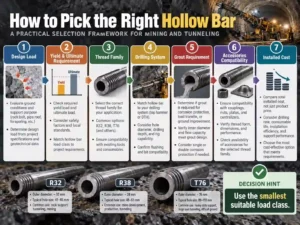
There are some simple steps to follow when trying to find what size you should use.
Step 1. What Load do you need?
Always start with your design requirements.
Step 2. What Yield/Ultimate Load do you need?
Dont just specify Ultimate Load.
Step 3. Use the smallest load that will meet your requirements.
Can you use an R32? If not what size will you need to go up too? Maybe R38 or something in between. If not then use the T76.
Step 4. What kind of conditions will you be drilling in?
Rock, Soil, hole stability. What kind of bit will you need? How are you going to flush out the hole? Self drilling or pre drilled hole.
Step 5. Know your thread system.
Bar thread, direction of thread. Couplers, nuts, drill bits, adapters, plates.
Step 6. What do you need for grouting?
Remember your bar is just one piece of the anchor you are making.
RFQ Checklist for Hollow Bar Selection
Don’t write to your supplier
“Can you please quote me R32/R38/T76 anchors.”
Send them the following information
- what is it being used for;
- what type of ground its going into;
- what thread/bar size;
- what yield load you require;
- what ultimate load you require;
- what internal diameter you need or min grout path;
- how long your anchor needs to be;
- section lengths if it needs to be transported;
- how many couplers required;
- what bit your drilling with and what diameter;
- what size bearing plate;
- which way the thread faces;
- what protection is needed;
- what grout you want to use;
- quantity;
- drawings.
This will give the supplier more information to quote you the full hollow bar system not just the steel by diameter.
Perguntas frequentes
1. Is R38 stronger then R32?
There are R38 hollow bar products that are stronger than their R32 counterparts. But you cannot go by thread size only. As mentioned above there are various wall thicknesses that will put your product in different load classes even with the same thread. Epiroc
2. Is T76 stronger than R38?
From what I can find online there are T76’s that are much stronger than your average R38. Wanfeng state their T76N & T76S’s have ultimate loads of 1,600 & 1,900kn. WF Ground Support But that does not mean that T76 will always be your answer.
3. What’s the difference between R32 & R38?
Both fall under the category of rope thread but as stated above they are different sizes and you will need different accessories to go with them. ISO 10208 Rope Thread
4. What thread does T76 fall under?
Most suppliers will tell you T76 is a trapezoid thread. DYWIDAG
5. Should I select hollow bar by Ultimate load?
No there are many things to take into account when selecting your hollow bar.
Conclusion: Pick the Load Class First, Then the Thread System
As we have seen there are more options then just R32 R38 & T76. When choosing your hollow bar think about what load class you want to achieve. Not what thread system you want to use.
You can get R32 in many different load classes.
R38 can be used to go up a load class from your standard R32’s.
And T76 is in a higher load class altogether and requires larger accessories.
The best selection sequence is:
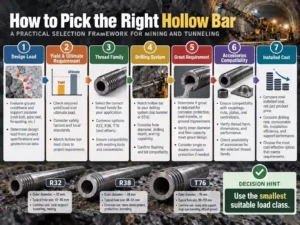
Design Load → Yield/Ultimate Requirement → Thread Family → Drilling System → Grout Requirement → Accessories → Installed Cost
For available Wanfeng systems, see:
Sistemas de ancoragem e fixação de rochas
Self-Drilling Anchor vs Conventional Rock Bolt
 Relacionado




Serviço excelente sempre.