

-
 Using RMR and the Q-System to Select Ground Support
- 20th Tháng 10 2026
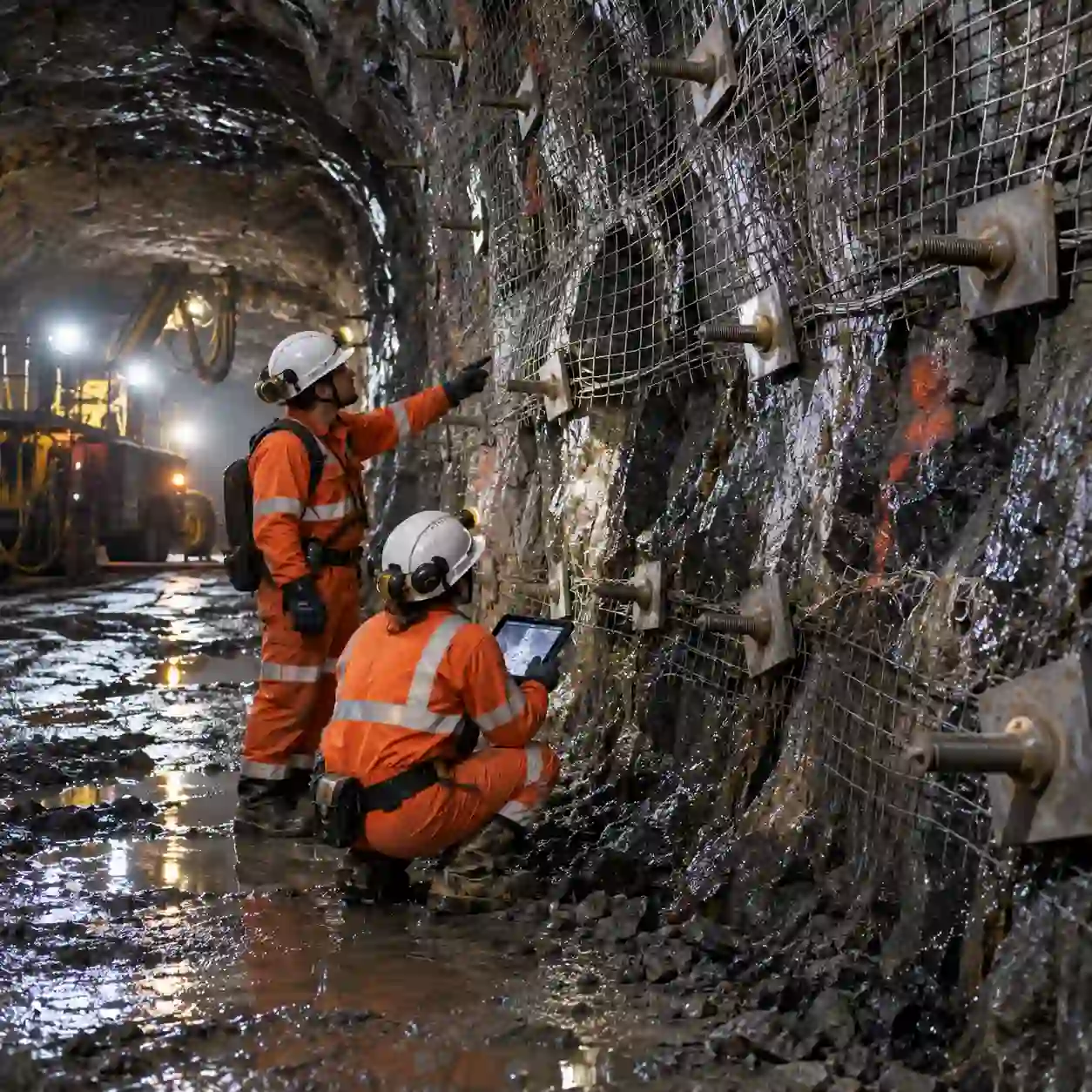 Using RMR and the Q-System to Select Ground Support
1. Why Rock Mass Classification Matters for Ground Support
When you create an underground opening by mining a tunnel or stoping a mine shaft you alter the stresses in the surrounding rock.
The rock surrounding the opening can open up along joints, detach blocks of rock, deform or fail due to high stress. This all depends on what type of geology you have, ground water, shape of the opening and stress.
All of these things need to be considered when choosing a ground support system.
There are many options available such as;
- Rock Bolts
- Bu lông cáp
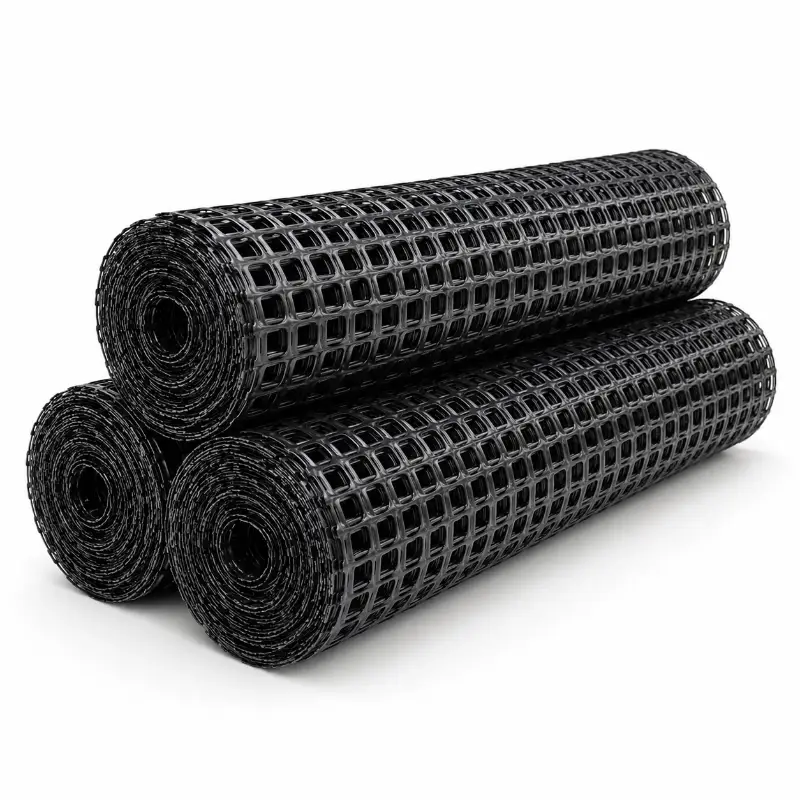
- Mesh
- Shotcrete with fibre
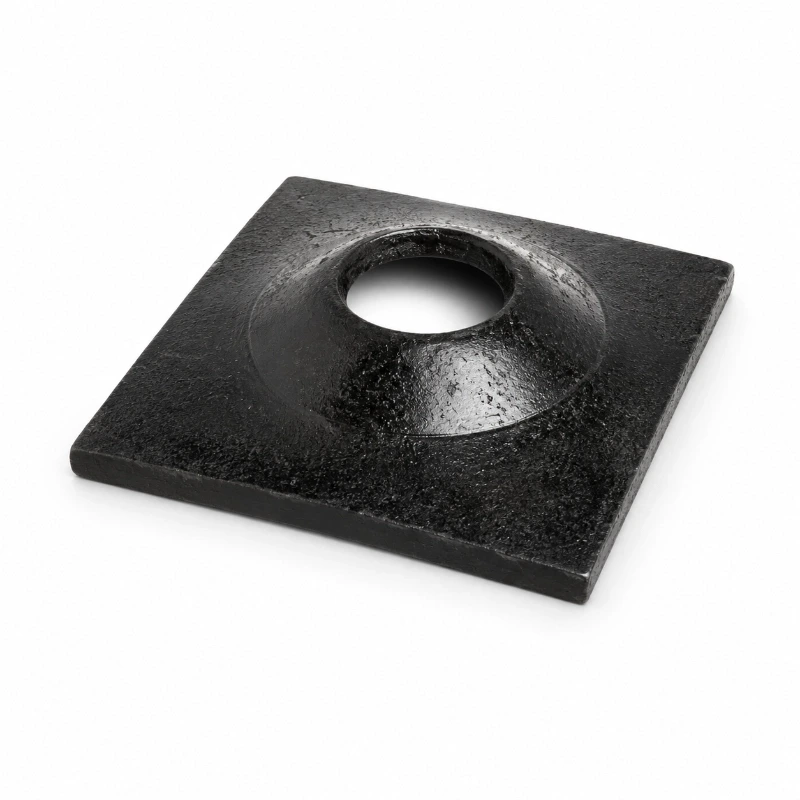
- Plates and steel strap
- Bộ thép
There are many classifications used to classify rock masses. These are useful to base your decision of support off.
But two tunnels could be classed with the same number yet require different forms of support. Orientation of the joints, size of opening and stresses and how they will fail will effect this.
For a broader explanation, see Ground Support Design: Matching the System to Rock Mass Conditions.
2. What Is Rock Mass Rating (RMR)?
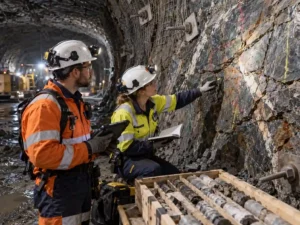
Rock mass rating (RMR) was created by Z. T. Bieniawski as an empirical method to characterize rock masses.
The typical RMR1989 formula has 5 criteria which you rate.
- Strength of intact rock
- Rock Quality Designation
- Discontinuity spacing
- Discontinuity condition
- Ground water conditions
You can also make an adjustment based on the orientation of the discontinuities to your excavation.
These values are added together to give an RMR classification.
RMR Rock Mass Classes
The conventional RMR1989 classes are:
| RMR Value | Rock Mass Class | Sự miêu tả |
| 81–100 | I | Very good rock |
| 61–80 | II | Good rock |
| 41–60 | III | Fair rock |
| 21–40 | IV | Poor rock |
| 0–20 | V | Very poor rock |
They represent a rating of rock mass not what the rock bolt will actually do for you.
What does the RMR have to offer when it comes to ground support selection?
The RMR can give you general excavation and support guidelines that have been empirically determined.
When the rock mass gets poorer the designer may want to consider increasing the reinforcement and/or more surface retention etc.
Some examples include:
Rock of good quality could use some localised reinforcing where instability is structurally controlled.
Rock of fair quality you may want to look at using bolts systematically and using proper surface retention.
Rock of poor quality you may require more reinforcing sprayed concrete and so on.
Again these are very broad statements used to screen rock masses.
There are many tunnel support recommendations from the original RMR1989. These recommendations should not be applied to all mining excavations as they were designed for certain excavations.
It is impossible to determine bolt lengths spacings angles and installed capacities using only a classification number.
3. What Is the Q-System?
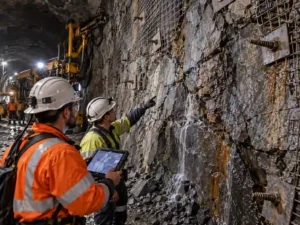
The Q-System was developed at the Norwegian Geotechnical Institute (NGI) for assessing rock mass conditions in tunnels and underground excavations.
It uses six parameters:
[
Q=\frac{RQD}{J_n}\times\frac{J_r}{J_a}\times\frac{J_w}{SRF}
]
Ở đâu:
| Parameter | Meaning |
| RQD | Rock Quality Designation |
| Jn | Joint Set Number |
| Jr | Joint Roughness Number |
| Ja | Joint Alteration Number |
| Jw | Joint Water Reduction Factor |
| SRF | Stress Reduction Factor |
Each one relates to different factors within the rock mass.
RQD/Jn is a description of the rock mass block size and joints.
Jr/Ja gives you information on the joint surfaces and resistance properties.
Jw/SRF is used to describe any effect from water or stress related problems.
The Q values can vary greatly between each other depending on rock mass quality.
You will need to use each value along with the appropriate Q System guide and knowledge of geology.
For the official methodology, consult the NGI Handbook: Using the Q-System.
4. How the Q-System Supports Preliminary Rock Support Selection
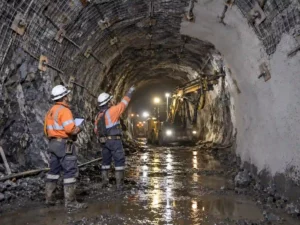
Another advantage of the Q-System is that there is an Empirical rock support chart available.
Rock Support will depend on the quality of the rock mass and the Equivalent Dimension of the excavation.
Equivalent Dimension and ESR
The equivalent dimension can be found using:
[
D_e=\frac{\text{Excavation span or height}}{ESR}
]
ESR is the Excavation Support Ratio which you choose depending on what the excavation is required to do and using NGI guidelines.
This allows you to have a value that will represent the difference between say a temporary underground excavation and one that has higher service and/or life safety needs.
To Use the Q System Support Chart
Typically you would:
- Find the values for each of the Q parameters.
- Calculate your Q value.
- Decide on the dimension of your excavation.
- Choose an ESR.
- Calculate the equivalent dimension.
- Use the correct Q System support chart.
- Evaluate if the recommendation fits your project.
You may be recommended to use spot bolts, rock bolts, fiber reinforced shotcrete or additional support depending on where you fall on the chart.
There are other factors such as bolt spacing and amount of spray concrete that are discussed in the NGI chart.
These are only recommendations and should not be taken as a green light to use the recommended reinforcement.
Handbook and assumptions used during design and project specific engineering should always be considered.
5. RMR vs Q-System: Key Differences
Although both methods classify rock mass conditions, their parameters and support interpretations differ.
| So sánh | RMR | Q-System |
| Development | Bieniawski | NGI / Barton and colleagues |
| Main purpose | General rock mass classification | Rock mass classification and empirical underground support guidance |
| Main inputs | Strength, RQD, discontinuities, groundwater | RQD, joint sets, roughness, alteration, water, stress factor |
| Rating format | Numerical rating, conventionally 0–100 | Multiplicative Q-value |
| Excavation dimensions | Considered within applicable support guidance | Explicitly considered through equivalent dimension |
| Stress treatment | Not represented by a directly equivalent SRF term in RMR1989 | Uses SRF |
| Support application | Empirical tunnel support guidance | Empirical rock support chart |
| Hạn chế quan trọng | Local structures and stresses may require separate analysis | Support chart must be interpreted within its scope |
Should they both give you the same answer?
KHÔNG.
They have different parameters and are derived from different data bases.
If you had a high strength intact rock mass with poor discontinuity conditions you may find the rock does not perform as well as you think it will based on it’s intact strength.
The same can be said for a tunnel if you were to have high stresses acting on it.
Both the RMR and Q value should not be converted to each other using an approximate relationship and its degree of uncertainty.
6. Practical Example: From Classification to Support Assessment
Imagine you have an underground roadway in a mine that has been mapped to show tight spacing of joints, broken up roof rock and some water inflow.
You want to establish a preliminary support category for this roadway.
Step 1 – Document Geology
You would document information on the rock strength if sound rock is available, RQD, orientation of discontinuities, condition of joints, ground water, size of excavation and any note’s on stress.
Step 2 – Establish RMR
The engineer would apply the given parameters to a given version of RMR and establish what rock class your roadway falls under.
Which will give you a general idea on how good your rock is and what type of support you may need.
Step 3 – Establish Q System Values
The engineer would apply each parameter RQD, Jn, Jr, Ja, Jw and SRF.
Then use that value of Q and apply to a given equivalent dimension to look up what support you would need based on NGI.
Step 4 – What type of supports you may need to use
Bolts to hold together unstable discontinuities
Hold broken up roof material together
Longer length bolt/anchor if needed
Grout or some other installation procedure that can be applied to your hole.
Step 5 – Look at what failures are actually occurring
If you have an unstable wedge you may need to place your support through certain release surfaces.
Classifications will always tell you what you may need but you still have to evaluate your structure.
Step 6 – Evaluate your support set up
Once you know what support you think you need you will have to see if that support can withstand the deformations, anchors will hold etc. And make sure you install it correctly.
This was just an example and not meant to calculate RMR or Q values for any particular roadway or dictate what support pattern you should use.
7. Translating Classification Results into Support Components
Once support requirements have been established, engineers and procurement teams can identify suitable product specifications.
| Engineering Requirement | Components for Evaluation |
| Reinforce jointed rock | Resin-anchored or fully grouted rock bolts |
| Extend reinforcement into deeper rock | Bu lông cáp |
| Retain loose surface material | Welded wire mesh, suitable flexible mesh |
| Provide surface confinement | Engineered shotcrete systems |
| Distribute surface loads | Bearing plates and steel straps |
| Install reinforcement in difficult boreholes | Self-drilling hollow anchors |
| Provide additional structural support | Engineered steel sets or arches |
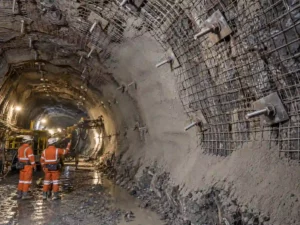
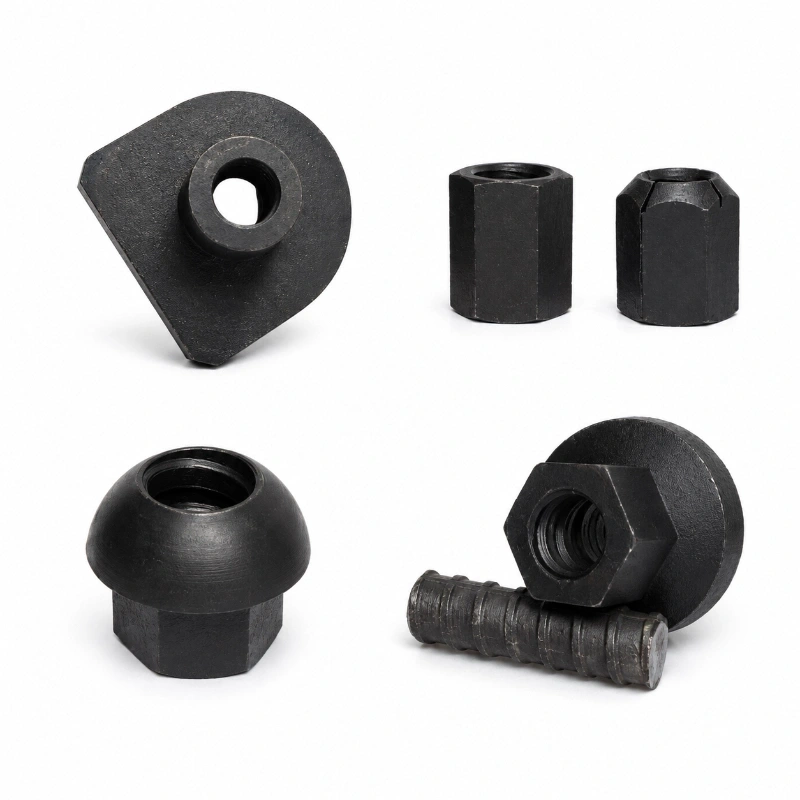
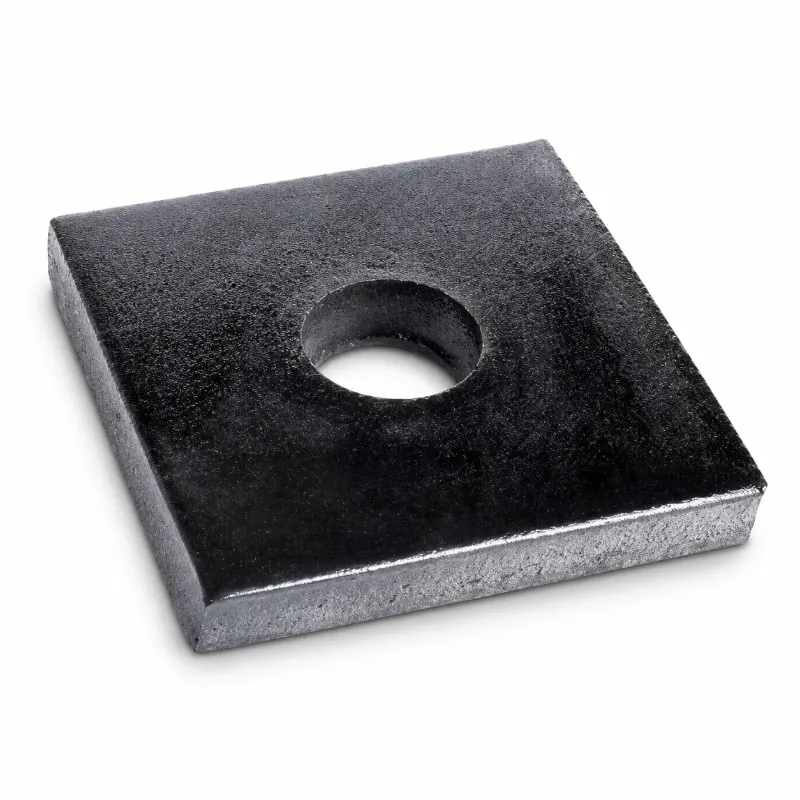
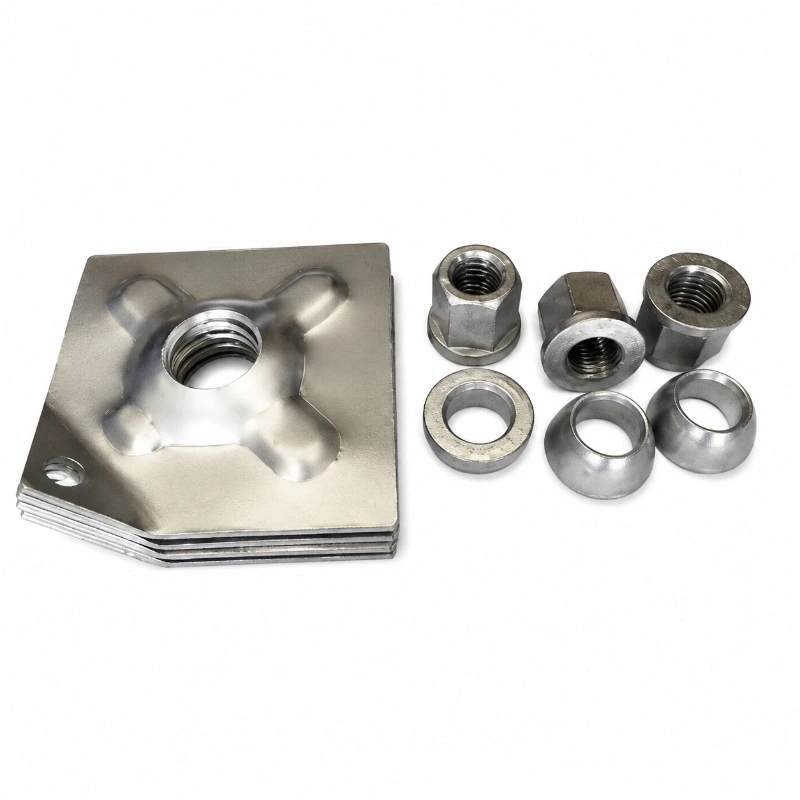
Below are some examples of components that may be used they are not always associated with specific RMR or Q values.
You will need to ensure the product meets the mechanical requirements of your design. Including but not limited to anchorage installability and longevity.
Learn more about component variations here Rock Bolt Types: Which Rock Bolt Is Right for Mining and Tunneling?
Here are some examples of our products being used on projects Wanfeng Mine Roadway Reinforcement Solutions
8. Limitations of RMR and Q-System in Ground Support Design
While classifications are good engineering practice they should not be used to develop a complete ground control solution.
Orientations
If you have a localised wedge or structure controlled failure mode this may require further reinforcement even if your ground class is good.
High Stress Environments
Stress fracturing/strain burst and rockburst loading may need further evaluation and proven dynamic support systems.
It will not guarantee the ability to withstand impacts from a classification.
Squeezing Ground
When dealing with large deformations you need to look at the load displacement behaviour of your total support system.
Just using a higher strength bolt will not allow for enough deformation.
Presence of Water
Groundwater will influence the rock mass and longevity of the support.
Need to consider how long the support needs to last in these environments.
Variable Ground Conditions
You can experience different ground classes in close proximity.
Just because you got a certain class in one part of your mine does not mean you can apply that to your whole mine.
Proper Installation
Using the correct support can still fail if not properly installed. This could include grouting and using compatible parts.
9. Ground Support Procurement After RMR and Q-System Assessment
While RMR and Q-system can give you an indication of what support may be required when procuring. They are not a specification to manufacture rock bolts or supports off.
Your RFQ should consist of your approved support design.
Technical Information
- Application on project and type of excavation
- Ground condition/classification you are working with
- Approved reinforcement drawings
- Type of rock bolt/cable bolt
- Size and length
- Grade and strength of steel
- Anchor/grout
- Bearing plate/nut/coupler
- Mesh/steel straps
- Bảo vệ khỏi ăn mòn
- Test and quality requirements
Commercial Information
- Quantity’s that you may require
- Delivery time
- How product will need to be packaged
- Certificate of inspection
- Where you need the product delivered
- If product needs to be manufactured for OEM or Project.
Wanfeng Product Supply and System Integration Services if you want to know more about supplying together.
10. FAQ
Q1: Difference between RMR and Q-System?
Rock mass rating is achieved with a series of geology variables given weightings. The Q-system allows you to classify the rock mass multiplicatively. Allowable to make an empirical determination of underground reinforcement.
Q2: Will RMR allow me to determine rock bolt spacing?
Empirical determinations can be made based off RMR. Again will require design.
Q3: How will I determine rock support from Q-system?
By knowing your Q’s calculate your Q value. Use your ESR to find your Excavation Equivalent Dimension and then look at the appropriate NGI chart. Determine failures at the mine site and design.
Q4: Is RMR or Q system better for use underground?
Depends on application, data available, empirical knowledge and methods of design. Could use both.
Q5: If I have a high Q value will I need less support?
Yes the conditions are more favourable. But again excavation size and instabilities, stress etc. can dictate.
Q6: Do I still need to analyse the ground using numbers if I have my RMR/Q values?
If your geometry becomes more complicated you may need further analysis. Also large structures can influence stability as well as stress. Squeeze and dynamic failures.
Q7: Can a mining supplier choose bolts based on RMR and Q value?
No they will require drawings that are designed. As well as mech specs etc.
11. Conclusion: Classification Guides Selection, Engineering Confirms Performance
RMR and Q-System can be used to help determine rock mass characteristics and initial underground ground support requirements.
RMR will allow you to categorize your rock mass. The Q-system allows you to determine an empirical relation between rock mass quality and excavation size/support.
Keep in mind that there are other considerations when designing final ground support such as structural failure modes, stress, deformations, water and conditions during install. Also support system compatibility should be evaluated.
They are a great tool to aid your engineering judgement. They should not be used as a replacement for engineering judgement.
Mine Project Specific Ground Support Components from Wanfeng
Rock Bolts, Self Drilling Anchors, Cable Anchoring Components, Wire Mesh, Steel Strapping, Bearing Plates, Nuts, Couplers and more. We Manufacture or Supply for Projects.
Manufactured and supplied to customers drawn and specifications.
Explore our Mining Ground Support Solutions hoặc Product Supply and System Integration Services.
Request A Quote For Ground Support Components
Provide us with your supported drawings and specs. Standards required, quantity’s and where they need to be shipped.
 Có liên quan




Dịch vụ tuyệt vời mọi lúc mọi nơi.