

Belt conveyor downtime rising? Improve mining performance through better idler selection, alignment, sealing, maintenance, and support.
Leer más
Both are used in mines and tunnels to help carry load into the surrounding rock mass. However there are some differences on how each achieves this.
Resin grouted rebar bolt will achieve anchor by the use of resin along the selected anchor length.
The mechanical expansion shell will gain most of its anchorage at one point at the rear of the borehole.
In short you could say:
Resin grouted rebar bolt gains anchor over it's length
Mechanical expansion shell is a mechanical anchor at one point.
There are many considerations when deciding what type of bolt to install in your operation.
Learn more about our range of Rock Bolt types here.

Split Set and Swellex are both used as friction-based rock reinforcement in underground mining and tunneling, but they do not work in the same way.
A Split Set-type friction stabilizer is a longitudinally slotted steel tube that is driven into an undersized borehole. The tube is compressed as it enters the hole, creating radial pressure and friction against the rock along the installed length. Official Split Set guidance emphasizes that anchorage depends strongly on the relationship between stabilizer diameter, borehole diameter and the actual ground condition.
A Swellex bolt is a folded, sealed steel tube inserted into the borehole and then expanded using high-pressure water. After expansion, the tube conforms against the borehole wall and develops contact with the surrounding rock. Epiroc currently publishes minimum breaking loads of 120, 120, 160 and 240 kN for the Pm12, Mn12, Pm16 and Pm24 Swellex models respectively.
So the simplest distinction is:
Split Set = drive the tube into an undersized hole
Swellex = insert first, then hydraulically expand the tube
Both rely on contact with the borehole wall, but their installation process, load behavior and sensitivity to site conditions are different.
For a broader overview of friction bolts within underground support systems, see Wanfeng's guide to Mining Ground Support Systems

Collapsing boreholes slowing drilling? See how self-drilling anchors combine drilling, grouting, and reinforcement to reduce rework.
Leer más
Mining ground support is more than just bolting up with the strongest rock bolt you can find.
Excavating underground creates new stress conditions that didn’t exist before the rock was removed. The rock mass surrounding that excavation may respond by fracturing, loosening, deforming or moving towards the opening - depending on geology, depth, excavation geometry and mining method.
A ground support system is therefore designed to control how that rock mass behaves and to keep the excavation serviceable for as long as it needs to be.
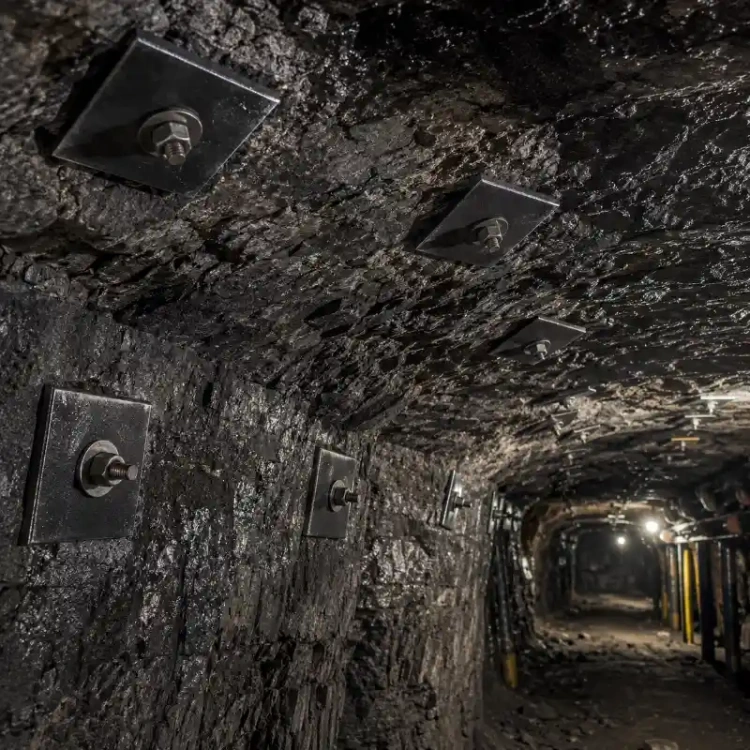
Rock reinforcement inside the rock mass + surface support at the excavation boundary + connection of those elements to allow them to work together
Typically underground ground support will involve a combination of elements such as:
Underground excavations
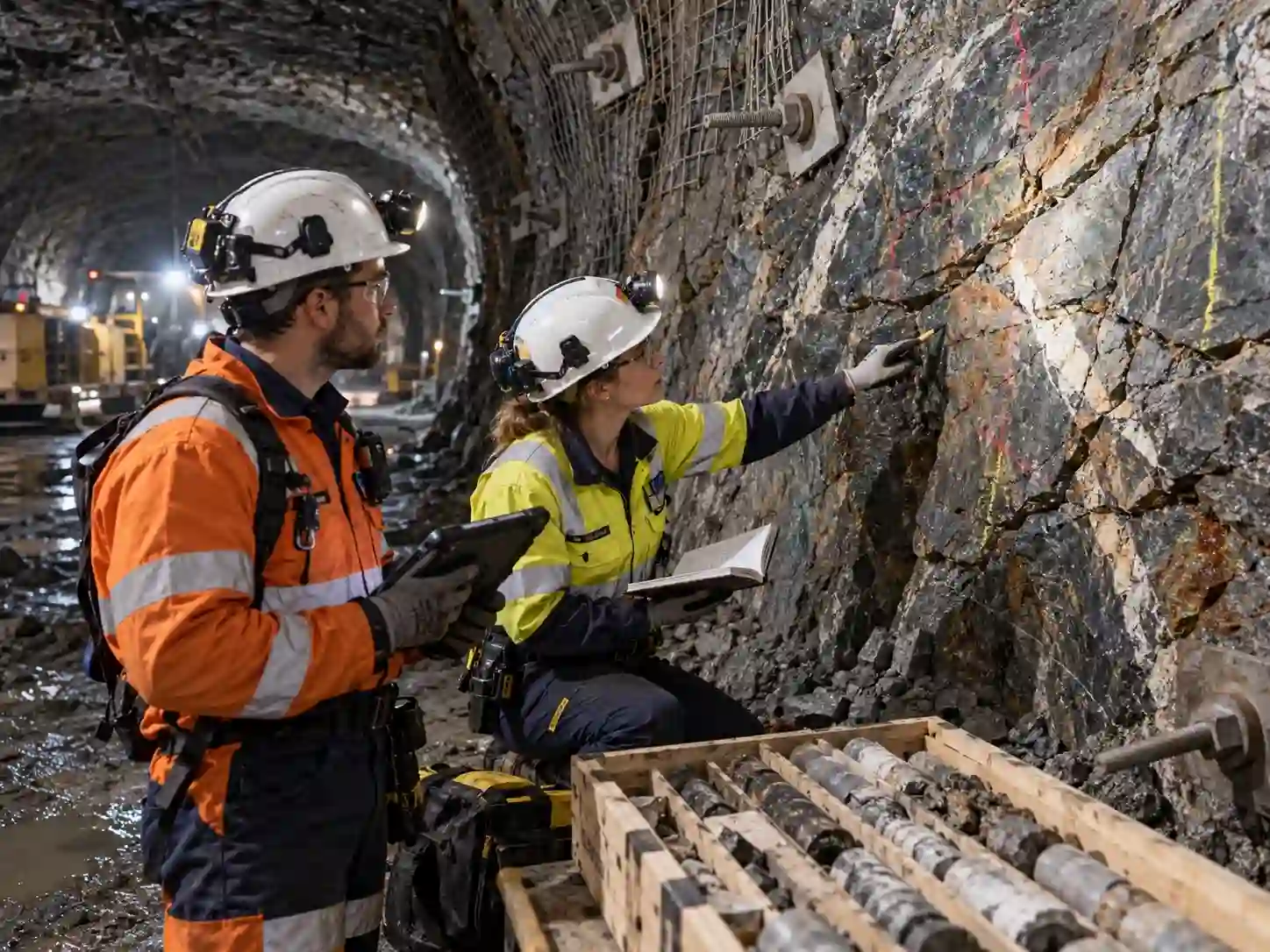
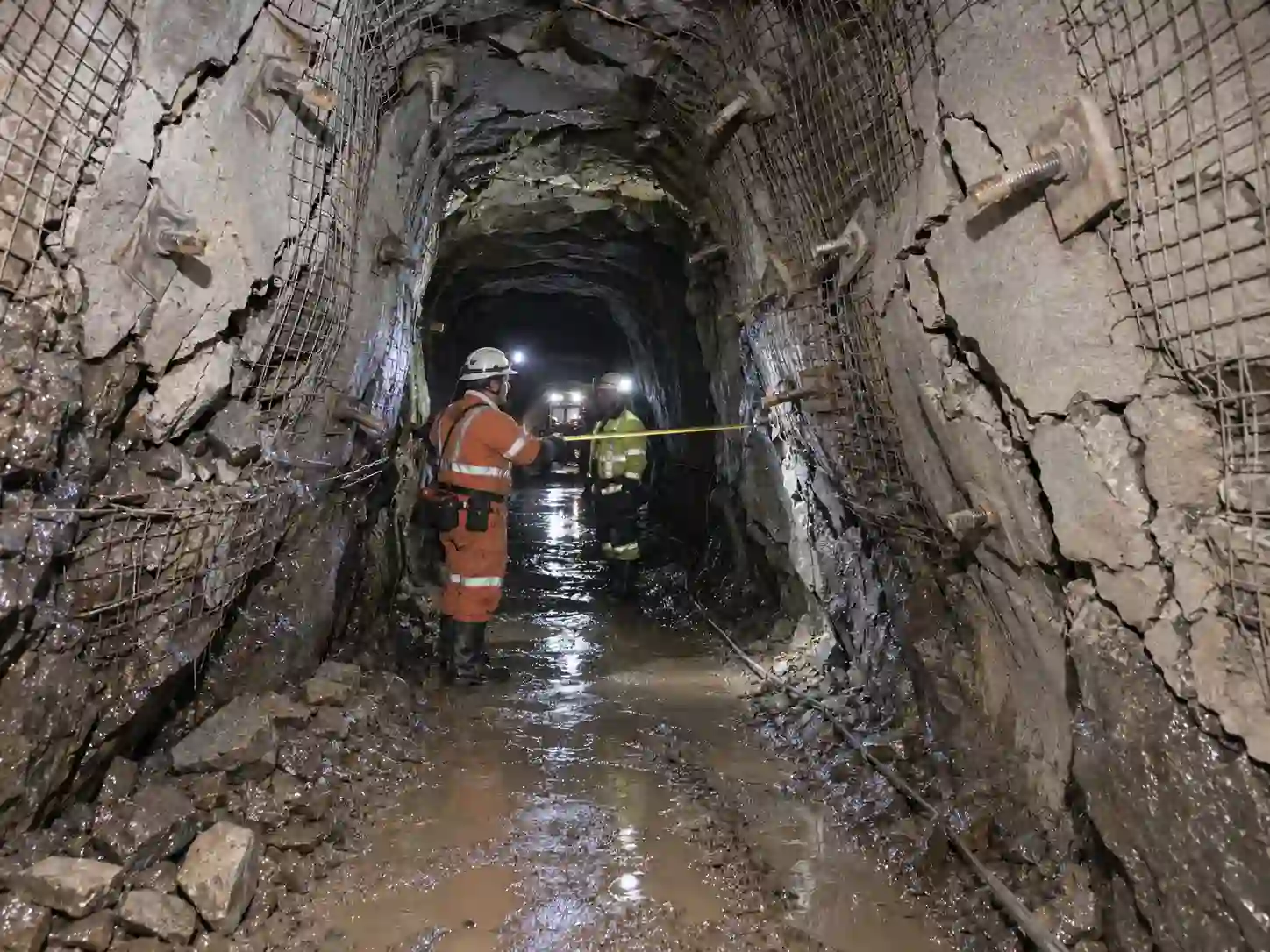
The Australian Centre for Geomechanics states that reinforcement elements work by penetrating into the rock mass to restrain internal movement while surface support such as mesh, straps and shotcrete serve to retain loose material at the excavation surface. It’s the interaction between these components that make a ground support system effective, rather than the capacity of any single bolt.
Wanfeng's ground- support product portfolio takes a similar system approach, including rock-bolt systems, cable bolts, mesh, steel supports, support plates, fastening components and resin/cement anchoring materials.

Cuando instalamos elementos de refuerzo para proyectos mineros, de túneles y geotécnicos, el material de anclaje es el medio que actúa entre el refuerzo y la masa rocosa.
Un perno de roca nunca actúa solo.
Sistema de pernos de roca = Perno de roca + Material de anclaje + Placa de apoyo + Tuerca + Masa rocosa circundante
Dos de los tipos de anclaje más populares son:
Anclaje de resina
Relleno de cemento
Ambas opciones pueden ser formas muy eficaces de refuerzo si se diseñan e instalan correctamente.
Sí que tienen características diferentes con respecto a:
velocidad de instalación;
capacidades de transferencia de carga;
equipo;
costo del material;
geología;
rendimiento de refuerzo a largo plazo.
Una opción no siempre es mejor que la otra. Todo depende de las condiciones del proyecto.
En Wanfeng, ofrecemos soluciones combinadas de inyección de lechada y materiales de anclaje, junto con componentes de soporte del terreno para su uso en proyectos mineros, de construcción de túneles y geotécnicos.