

-
 مسؤل
- 21st أكتوبر 2026
Rock Bolt Bearing Plate Purchasing and Assembly Fit
A rock bolt bearing plate order deserves more than a size and a price, even if the part itself looks simple. Before you buy, settle the fit with the bolt and washer, the drawing revision, and the evidence your site needs to accept delivery. Those details are much harder to sort out with a shipment waiting to be unloaded.
The awkward questions tend to sit between catalogue entries. Will your washer seat on that dome? Does the offered hole allow for the finish specified on the drawing? What did the supplier mean by the quoted load? You don’t need to redesign the support system to ask these questions. You need enough detail to buy the component your engineer has already specified.
Why Bearing Plates Belong in the 2026 Ground Support Discussion
The upcoming Ground Support 2026 conference puts in situ support-system capacity and capacity degradation on its agenda, alongside mechanised installation and highly corrosive environments. Scheduled for 17–19 November 2026 in Brisbane, it gives buyers a timely reason to look again at these small connections.
For a rock bolt bearing plate buyer, that agenda brings up a fairly ordinary problem: purchasing the bolt and its accessories separately can leave nobody checking the connection between them. Force passes through that connection to the supported surface. Buying the specified plate therefore involves knowing what goes above and below it, including any mesh or strap in the design.
Your engineer determines the support design. Procurement’s contribution is more practical: keep the specified connection intact when a supplier, finish or part number changes.
Getting the Rock Bolt Bearing Plate Hole Right
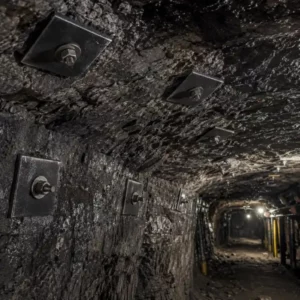
An enquiry saying “one-inch hole” will probably get you a price, though several details remain open. Is that the nominal diameter, and how far may the finished hole deviate from it? Where is its centre on the plate? For a formed washer seat, you also need the surrounding profile. A photograph helps explain the shape. It rarely settles the dimensions.
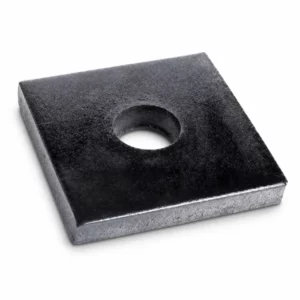
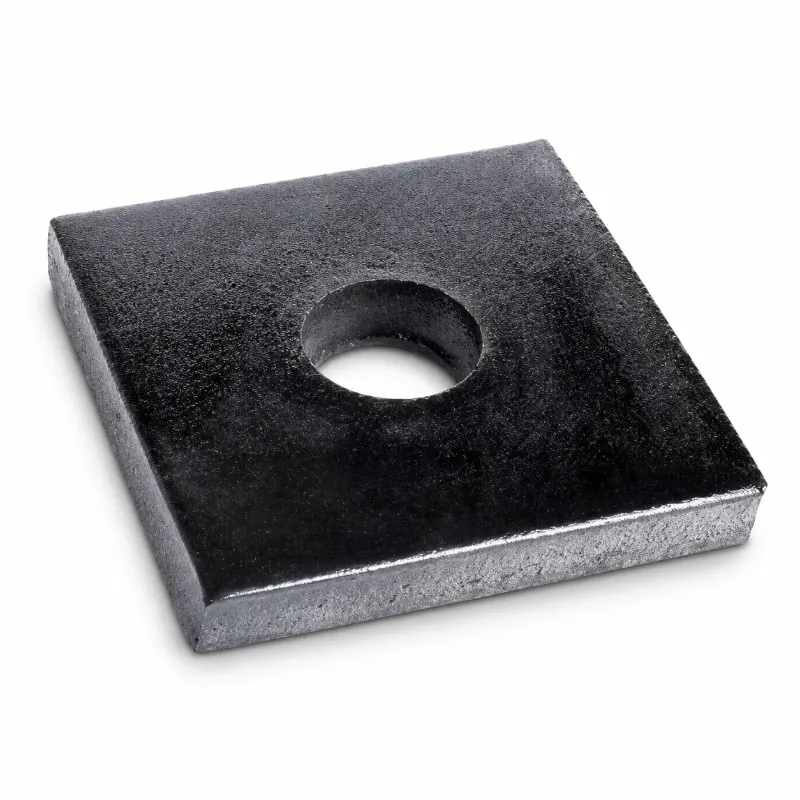
On the Flat Bearing Plate product page, you’ll find outer sizes from 4 × 4 to 8 × 8 inches and hole diameters of 1/2 to 2 inches. Your enquiry needs to narrow those options down to the dimensions on the approved drawing. Include the tolerances too, so quotations cover the same part.
Watch the units when copying those dimensions into an RFQ. A four-inch side converts to 101.6 mm. Writing 100 mm may seem harmless, but now you’ve requested a different size. Whether that difference is acceptable is a question for the designer, before the drawing goes to production.
An assembly sample is especially useful when changing suppliers. It lets you examine clearance and seating with the actual bolt, nut and washer. Fit is the question being answered here. Load capacity needs its own evidence.
Flat, Domed and Butterfly Plates Need Different Drawing Checks
Which shape belongs on your enquiry? Use the approved contact arrangement to decide. Even a rock bolt bearing plate with the correct outer size may differ around the washer or where it meets the supported surface.
Flat Plates and the Contact Surface
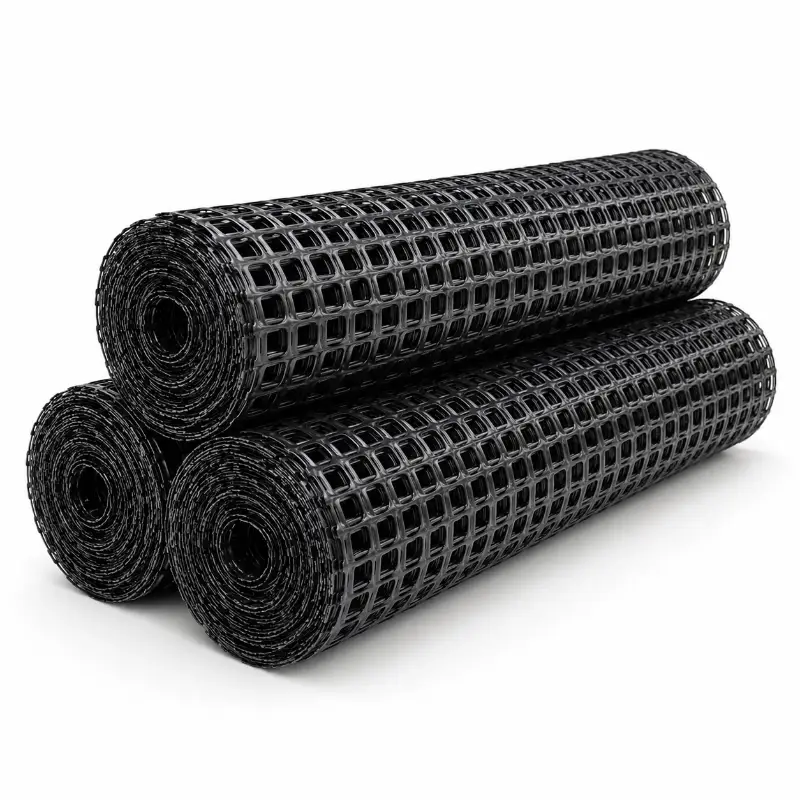
For a flat plate, the broad face is only part of the story. On uneven rock, don’t assume the entire square will be in contact. Your drawing should also show any mesh or strap beneath it. A supplier quoting the steel part alone needs to see how you intend to assemble it.
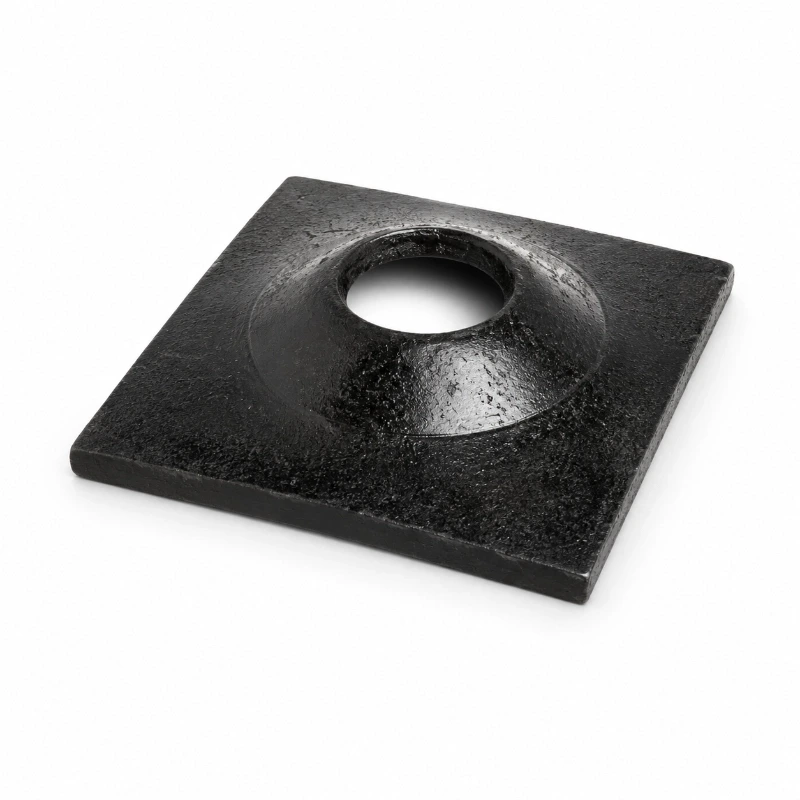
Domed Plates and the Washer Seat
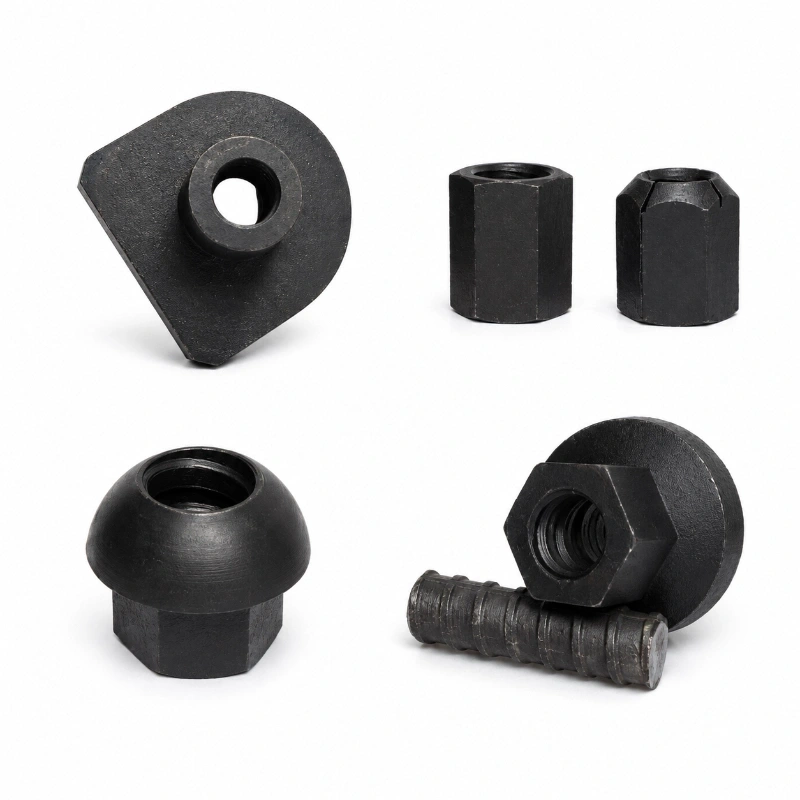
For the Mining Domed Plate Washer for Roof Bolts, the listed material is HSLA 65 steel, with several thickness options. The question moves to the formed centre: does the proposed dome match the seat your washer needs? Send the washer drawing if it comes from another supplier, so both sides of the connection can be checked.
Be careful with the word “domed” when discussing an angled bolt. It doesn’t by itself establish an angle-compensating function. If you’re buying for a U.S. underground coal mine, check 30 CFR § 75.204: it covers washer conformity and, for a tensioned bolt more than five degrees from perpendicular to the plate, requires an angle-compensating device. For projects elsewhere, check their applicable requirements. Obtain design approval for a proposed substitution.
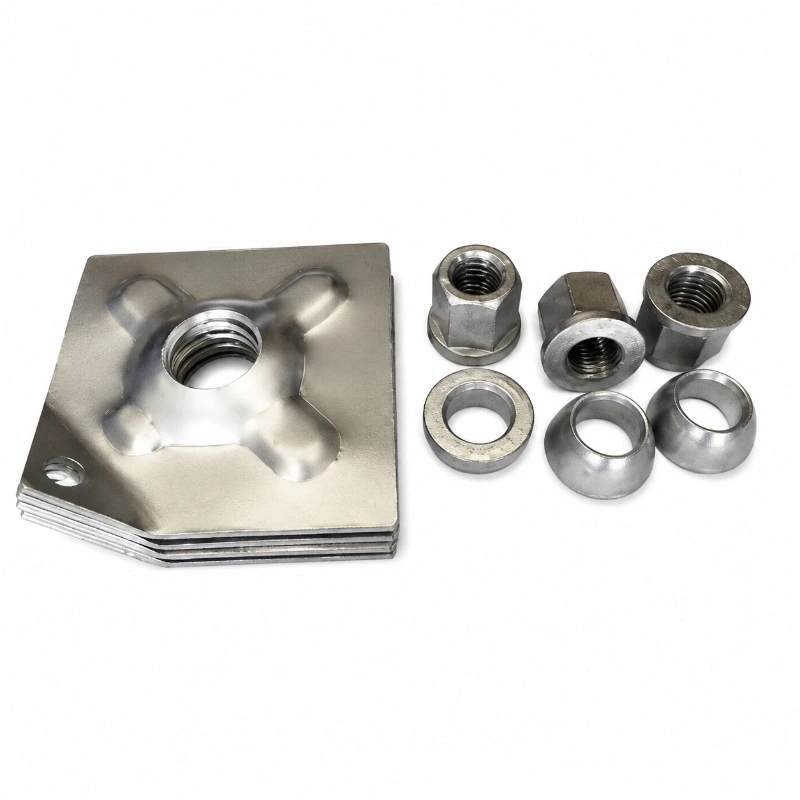
Butterfly Plates and the Formed Wings
Butterfly Anchor Plate for Rock Bolt Support is listed in configurations such as 120 × 120 × 5 mm and 150 × 150 × 8 mm. Those dimensions leave the wing shape unspecified. Get the formed-part drawing, particularly for an assembly using mesh or straps, before approving a replacement from another supplier.
A Load Figure Needs a Test Condition Beside It
Read the heading above the flat-plate load figures before copying them into your comparison sheet. The measurement is taken at 0.250 inch deflection, equivalent to 6.35 mm. It answers “what load was recorded at this displacement?” You can’t use it to answer “what is the allowable load underground?” without the relevant design assessment. Nor does that label tell you the breaking load.
The next question is whether the tested specimen matches your order. Look for its dimensions and material in the rock bolt bearing plate report, then read how the test held and loaded it. If one quotation refers to a different thickness or test setup, ask for clarification. Until that’s resolved, comparing the two load figures won’t tell you which offer meets your specification.
There may be a steel certificate in the offer as well. Keep it, but read it for what it covers: the supplied material. Where your specification calls for a plate test, that evidence is still needed. Agree the paperwork during quotation and how it will identify the delivered batch, while the supplier can still price that scope.
Corrosion deserves the same specificity. The conference theme does not establish which coating your project needs. Put the engineer’s surface-treatment requirement on the enquiry, then confirm how the delivered finish will be accepted. “Suitable for mining” leaves too much undecided.
What Receiving Staff Need from the Purchase Order
A delivery can contain the right quantity and still be difficult to release. Imagine two visually similar plate sizes arriving together with labels that do not identify the drawing revision. Measuring them will help, but which approved order item does each batch belong to? The packing information should let your receiving team answer that without reconstructing the email trail.
At receiving, the accepted drawing should be available beside the inspection record. That lets staff record what they measured against what was ordered, rather than just writing “dimensions checked”. Include a sample assembly check where specified and keep the paperwork traceable to the batch. Anything outside the agreed limits stays separate until there is a written disposition.
An undersized hole is a good example. Enlarging it locally changes the supplied part and may damage the finish. Before anyone starts drilling, the responsible quality and engineering personnel need to approve what happens to that batch, including any rework procedure.
For your next rock bolt bearing plate order, Wan Feng offers the plate ranges discussed here as well as other mining and tunnelling support components. Its manufacturing and technical services are worth consulting if the catalogue configuration doesn’t match your drawing. You can send an enquiry with that drawing and the accessory details. Include the quantity and destination, and request an offer that spells out any proposed changes. Then your engineering team can review a specific proposal before you commit.
الأسئلة الشائعة
What Should a Rock Bolt Bearing Plate Enquiry Include?
Send the drawing revision and quantity with the enquiry. Make sure the drawing covers material, finish and hole tolerances, and attach the accessory drawings needed for a fit review. The quotation should also cover whatever certification or test evidence your purchase specification requires.
Can Two Plates with the Same Thickness Be Interchangeable?
Equal thickness doesn’t settle interchangeability. You still need to compare the holes, material and formed shape with the approved drawing. Refer the proposed replacement and its performance evidence for engineering review before purchasing it as a substitute.
Does a Domed Bearing Plate Correct an Angled Bolt?
Do not infer that function from the shape. Check the specified washer and any angle-compensating device in the approved assembly. A formed plate and a device intended to accommodate an angle are separate components to assess.
How Should You Handle a Batch with Incorrect Holes?
Hold the affected batch and record the measurements against the drawing. Obtain a written disposition from the responsible quality and engineering personnel with the supplier. Avoid local enlargement until an approved rework procedure addresses the altered component and finish.
Can You Order a Bearing Plate to a Custom Drawing?
The listed ranges allow selected dimensions, holes and finishes to be customized. Get the supplier’s confirmation against your complete drawing before ordering. Tight tolerances or additional inspection requirements need to be agreed during that review, alongside the delivery terms.
 متعلق ب




خدمة ممتازة في كل مرة